This is the third post in a three-part series I am writing about my recent trip to Tirana, Albania. — April
Monday morning, my friend and I were trying to decide how to spend our last day in Tirana. It was raining, but all of the museums were closed due to it being Independence Day. A man on the street overheard us and stopped. Turns out, he is a tour guide, and he took us on an impromptu tour of the city.
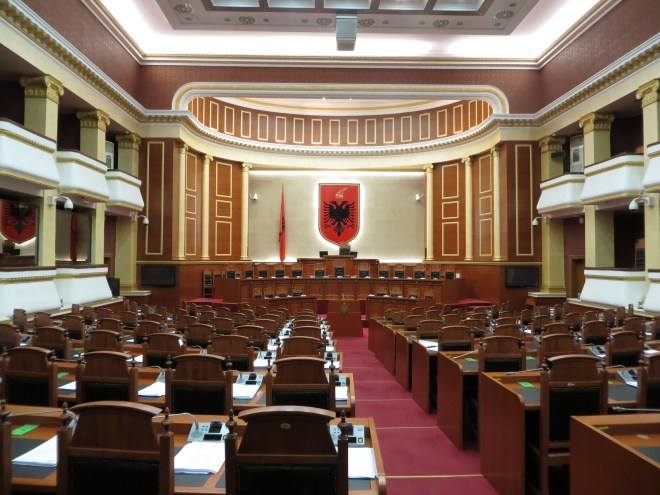
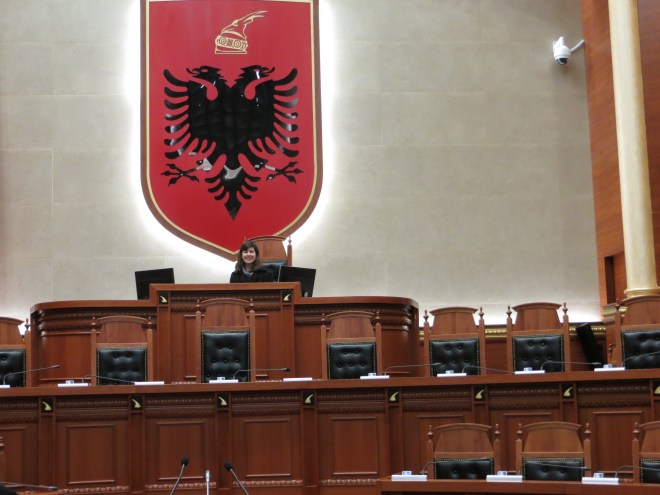
We made several interesting stops along the way, including the Albanian parliament. We were standing outside of the building, talking, when the guards invited us inside.

As I posted yesterday, Albania was under communist rule until 1990. Today, its government consists of two parties, the Socialists and the Democrats.


One thing that really struck me about Tirana (and Albania in general) is the mix of influences you see. Like Kosovo, Albania is largely Islamic (due to influences from the Ottoman Empire) and has a minority Catholic population. Our tour guide told us that under communist rule, religion of any kind was banned. The churches and mosques in the city today are all new.


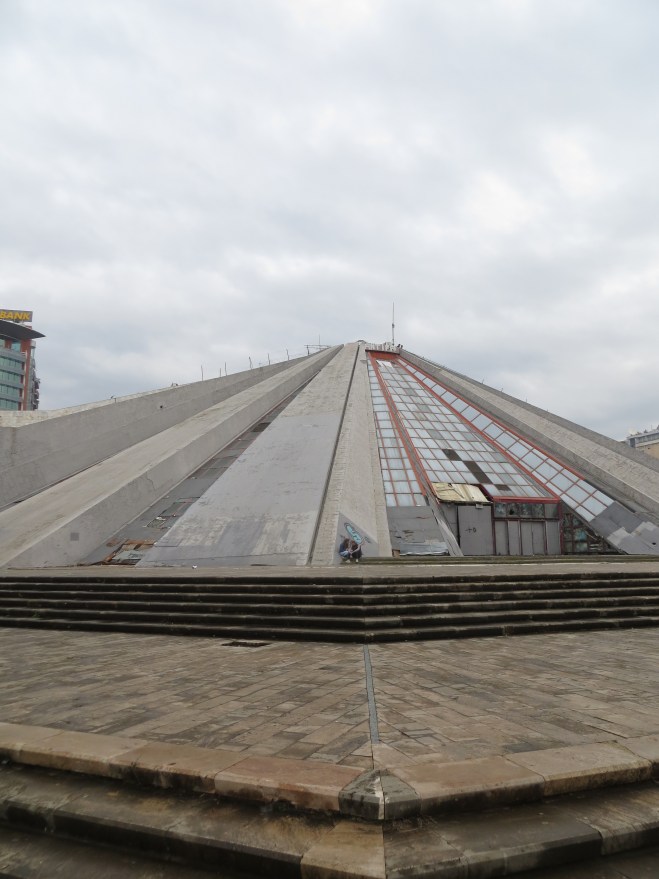
This pyramid is a famous source of controversy in Tirana. It was built by Albania’s communist ruler, Enver Hoxha, as a tomb for himself. He died in 1985. His body was entombed in the pyramid for only a few months, and was then moved to a cemetery outside the city in order to discourage protests. There has been much debate about whether to tear down the pyramid, or to keep it as a reminder of history. According to our tour guide, Tirana plans to begin restoration on the building sometime next year, and turn it into a museum.

One thing to note, while our tour was interesting, our guide was evasive about the price until the end. My friend and I both feel like he overcharged us. So I would say if you’re a foreigner traveling in Tirana, use extra caution and insist on prices up front!
 Hello from Kosovo