Adem Jashari Memorial

Yesterday, I visited the Adem Jashari Memorial in Prekaz, Kosovo. I only have two weeks left in Kosovo and I felt I couldn’t leave without seeing it.

Adem Jashari was the leader of the Kosovo Liberation Army (KLA). (If you say in in Albanian, it is “Ushtria ç Kosovës” with the acronym UÇK.) The KLA was a separatist group of ethnic Albanians who wanted to secede from Yugoslavia. Adem Jashari has since become a symbol of Kosovo’s independence.

In March of 1998, Serbian forces attacked the Jashari family compound in Prekaz, Kosovo. Over a course of three days, 59* members of the Jashari family were killed, including children. (*I’ve read varying reports of the numbers, ranging from 55-59. But there are 59 family photos displayed at the museum, so I am sticking with that number.)

Disclaimer: This post contains photos of bombed-out buildings and may be disturbing to view.

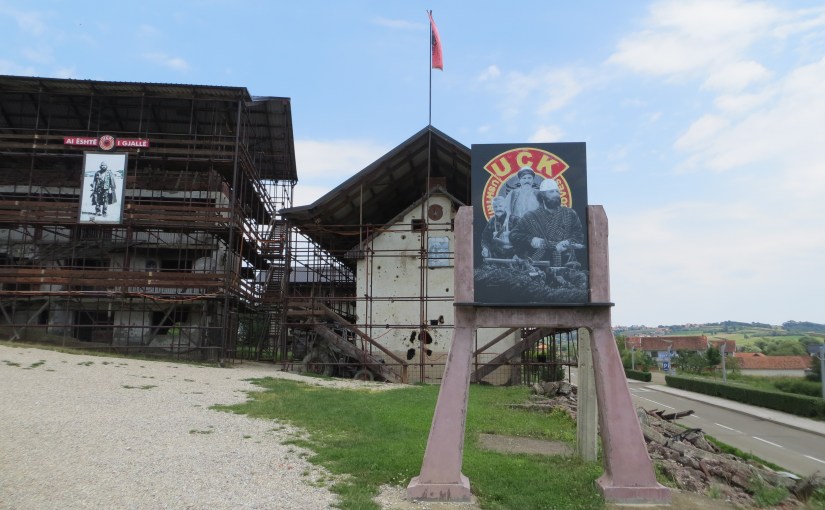
The memorial site consists of a small museum, the family graveyard, a memorial park, and the Jashari family compound.

adem Jashari1
Adem Jashari statue in the nearby village of Skenderaj.
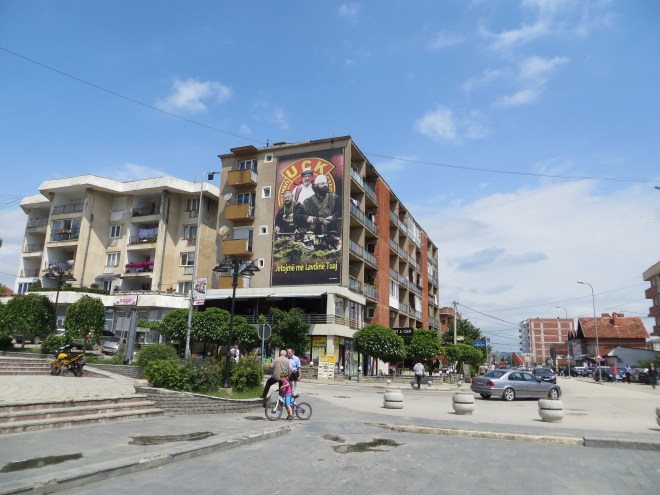
adem Jashari2
Photo in the center of Skenderaj
adem Jashari3
On the walk to the museum
adem Jashari4
First house that I saw. I tried googling the names of its occupants but I am unsure of who they were in relation to Adem Jashari.

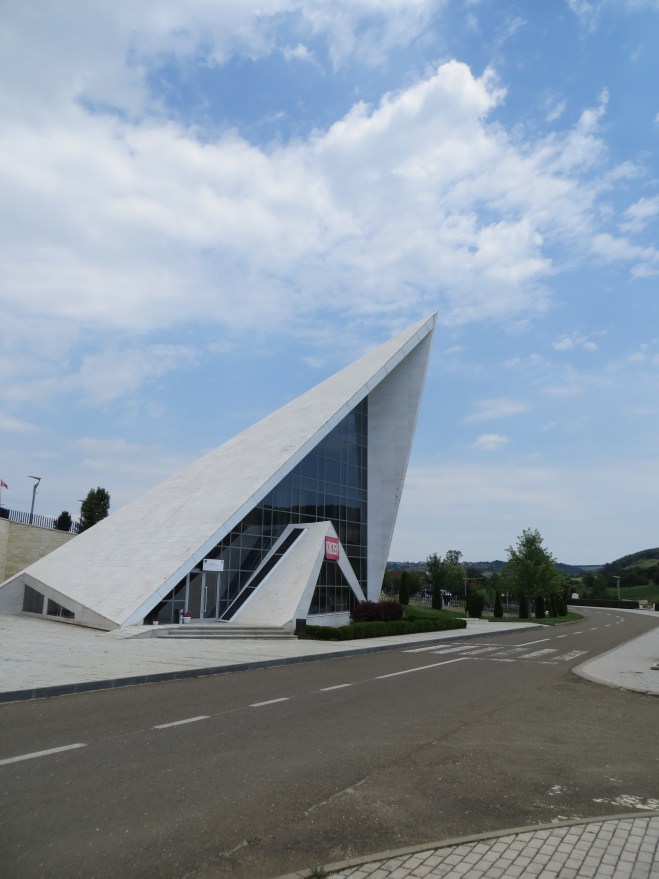
The Adem Jashari Museum is free to visit. It is about a ten-minute walk from the Skenderaj bus station.
adem Jashari5
The Adem Jashari Museum
adem Jashari6
There wasn’t an English translation but I am fairly certain these are all of the people who died in the massacre, 59 in total.
adem Jashari7
Adem Jashari’s gun. Almost every depiction I have seen of him shows him holding his gun.
adem Jashari9
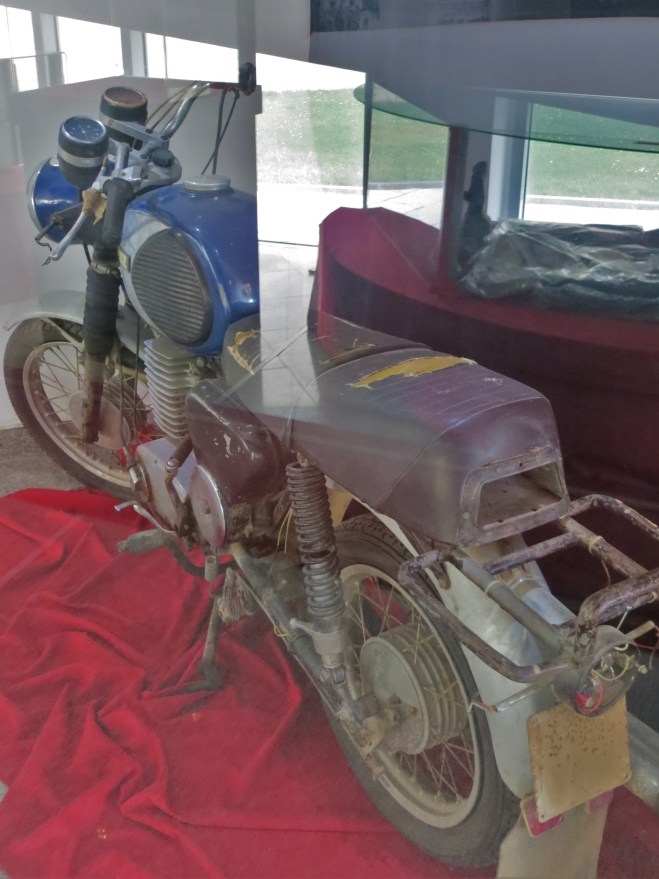
Adem Jashari’s motocycle
adem Jashari8
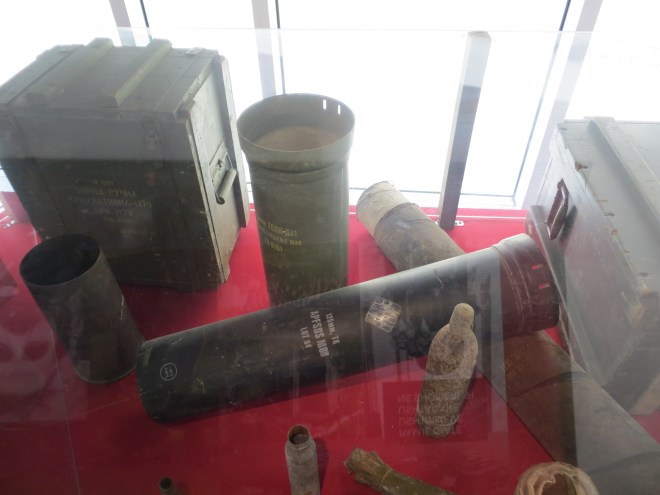
Munitions used by Serbian forces during the attack on the Jashari family compound.
adem Jashari10
The Jashari family tree

After stopping in the museum, I went across the street to the park. This is the cleanest and most well-kept space I have seen in Kosovo. There were two military guards standing watch.
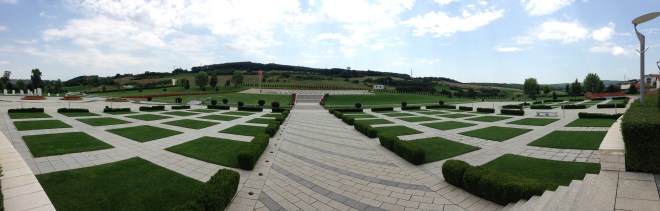
Pano Adem Jashari memorial park
.
adem Jashari12
.
adem Jashari13
.
adem Jashari14
.
adem Jashari15
.

In the photo below, each marble slab bears the name and birth/death date of a member of the Jashari family.

adem Jashari16

I don’t know the symbolism behind these red flowers. Red is a popular color in Kosovo because it is the color of the Albanian flag, and the majority of Kosovars are ethnic Albanians. However, the flowers made me think of a river of blood, personally.

adem Jashari18
.
adem Jashari17
.
adem Jashari19
Jashari family cemetary, with the museum in the background

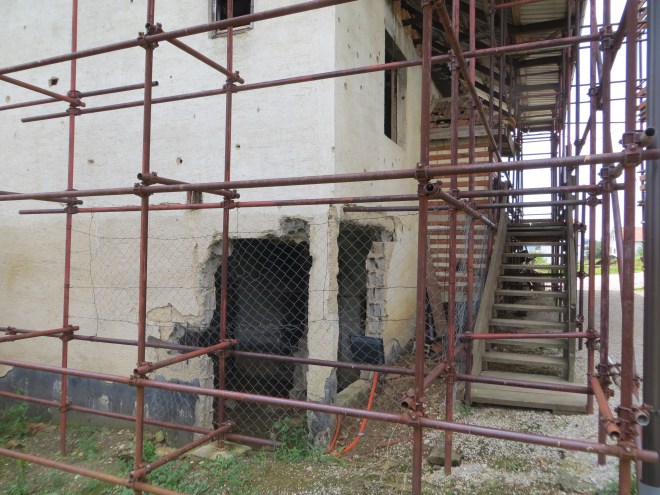
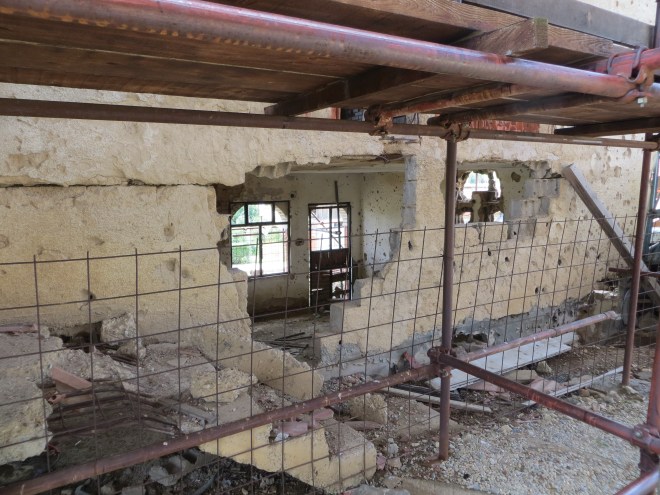
Here are photos of the family compound. Scaffolding has been built around the remains of the buildings so that visitors can walk around and look inside.

adem Jashari24
.
adem Jashari21
.
adem Jashari22
I cannot imagine the force needed to blast through walls these thick.
adem Jashari23
.
adem Jashari25
.
adem Jashari26
.

Without offering an opinion on Kosovar history or politics, I will say that visiting the memorial site was a somber experience. It is hard to imagine what it would be like to not only put your own life on the line for your beliefs, but also the lives of your family members. It was also sad to think of the children who died during the attack on the Jashari compound.

The Aran Islands

On Wednesday of our week in Ireland, Whitney and I woke to more rain. We trudged out to get donuts and pick up our handmade scarves because they had to be washed before we could wear them. Then we packed up at our hotel in Dublin, ate lunch, and jumped on a bus to Galway.

Galway Ireland
The view from our Airbnb in Galway
spanish arch galway
The Spanish Arch, Galway

We booked a tour of the Aran Islands/Cliffs of Moher for Thursday. It was through Wild Atlantic Way (highly recommend) and was an all-day event. We got on the tour bus at 9 a.m. and didn’t get back until 6 p.m.

The bus picked us up in Galway and drove us through the Burren (pronounced “burn”). According to Wikipedia, “The Burren is a region of County Clare in the southwest of Ireland. It’s a landscape of bedrock incorporating a vast cracked pavement of glacial-era limestone, with cliffs and caves, fossils, rock formations and archaeological sites.”

somewhere in the burren
A photo pitstop in the Burren

(Another fun pronunciation fact I learned in Ireland: I thought the word quays was pronounced “kways” but it is actually pronounced “keys.”)

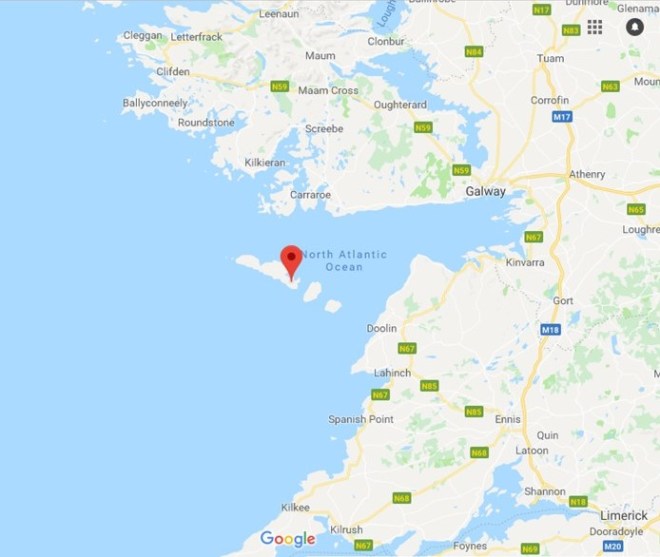
The bus dropped us off at a ferry and the ferry took us out to one of the Aran Islands, where Gaelic is spoken as a first language.

Aran Islands
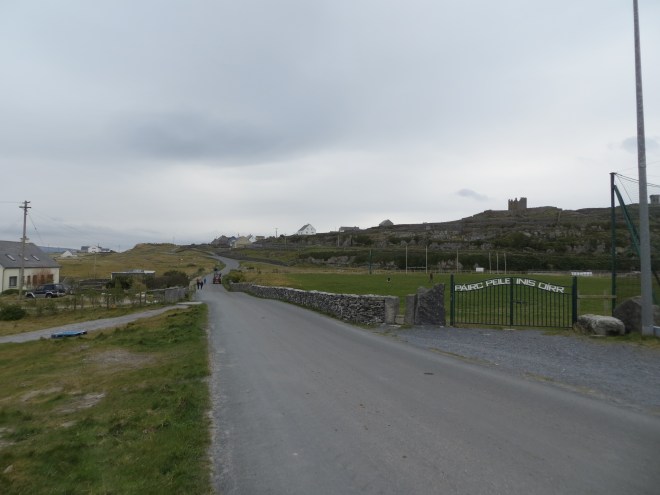
The Aran Islands
galic sign
Me with a sign in Gaelic
Aran Islands 1
The Aran Islands
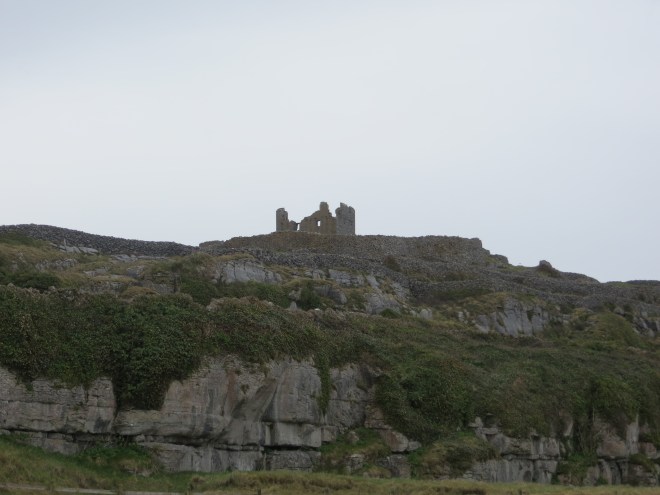
ruins aran islands
Ruins

It was freezing on the island. However, we saw palm trees! We learned an interesting fact on the tour bus: the rocks in this part of Ireland (don’t ask me which ones) are very good at conducting heat. Therefore, you see plant life that is only seen elsewhere in the Mediterranean.

palm trees aran islands
Tropical trees growing in very un-tropical weather

Whitney and I walked around a bit, visited a local shop, and then stopped at a pub for lunch. I had Irish stew. (The bartender told me, “That’ll keep you going for a while.”)

whitney aran islands
Whitney
aran islands 3
So many rocks!
aran islands 4
Local shop

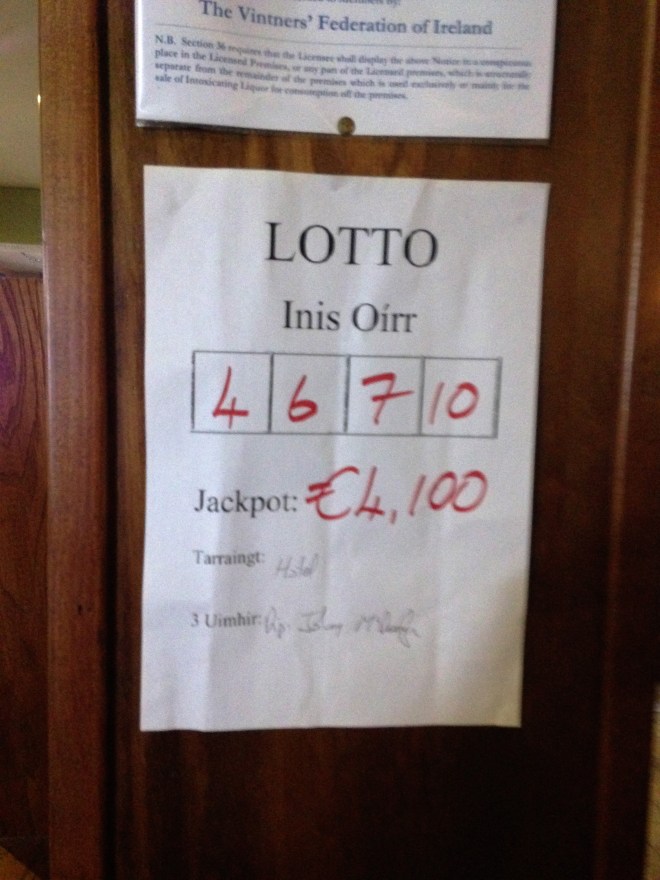
At the pub, we saw a notice that the local lottery jackpot was up to 4,100 Euro. 🙂

IMG_8209
Win big!
aran islands 5
My friend has a daughter named Saoirse so I took this photo for her. 🙂
aran islands 7
Goodbye, Aran Islands!

After lunch, we got back on the ferry and headed out to see the Cliffs of Moher. Stay tuned for Monday’s post to read more about that. 🙂 It’ll be my last post about Ireland! I hope you’ve enjoyed learning more about the country through my experiences.

Guest Bloggers: Todd and Stephanee Smith (Serving as a Married Couple in the Peace Corps)

“Love does not consist of gazing at each other, but in looking outward together in the same direction.” — Antoine De Saint-Exupery

stephanee-and-todd

Thanks to April for asking us to be guest bloggers on what it’s like to serve as a married couple in the Peace Corps. As one of two married couples in our cohort, we are probably having a different experience than our fellow volunteers.

Some background: We’ve been married over 20 years, no kids, and left behind steady, comfortable jobs. We were both ready for a life and career change. It was a decision that we took very seriously, and worked through the pros and cons together. We think that when you serve as a couple, you both need to be all in because if one person has reservations, it’s going to be a difficult experience for both of you.

Pre-service training (PST) was the biggest challenge of our service. Peace Corps required us to live separately (different home/different village) for our first 3 months of training. We knew this going into our service, so it didn’t come as a surprise. And while it did allow us to have our own, separate experiences while developing our own identities within our cohort, it was definitely a very challenging experience. PST has a lot of ups and downs and when you are used to sharing those types of life experiences with your partner, and he/she isn’t around, it can be difficult. While not being able to see your partner whenever you wanted was difficult, we will say that the PST set-up did allow for a lot of interaction. Our villages were only a few miles apart and there were plenty of hub days or sector training that, for the most part, we were able to see each other in person more often than not.

Once we finished PST, however, a sense of normalcy returned. We resumed living together, cooking for ourselves, having similar schedules and just a feeling of being a married couple once again. Some advantages of serving together is that you always have someone to hang out with, whether it’s at the café, at home, dinner, or simply riding the bus. We are in the same sector so we have that in common, and we even share tutoring lessons. We always have a travel partner. Loneliness isn’t as big of an issue as it may be with other volunteers. In the winter, the advantages are even better—never underestimate the power of body heat in an unheated bedroom.

However, there are some disadvantages as well. Our language learning isn’t progressing as quickly as we would like as we always have someone to talk to in English. As a married couple, our host family gives us plenty of privacy so we probably don’t have as much interaction as many other volunteers may have with their families which also hampers our language skills. We also sometimes feel that we probably haven’t formed as many close relationships with our cohort due to the fact we have a “built-in” friend. Of course, that could be because not only are we a married couple, but we’re also older than most everyone in our cohort!

Despite some disadvantages, being a married couple has only enhanced our experiences. Neither of us can imagine trying to go through this adventure alone. We rely on one another to get through our struggles and are able to enjoy small successes together. So far, our experience in the Peace Corps has been pretty much what we expected. Some ups, some downs; but all made easier by having someone to share it with.

April’s Note: Happy Valentine’s Day! If you’d like to read more from other guest bloggers, here are some links:

A Mysterious Phrase

I’ve been on a hunt for the last week or so to discover the meaning of a mysterious phrase. It’s something my host mother says often: “të myt e dala.” (Sounds something like “tuh-meet-uh-dala.”)

My host brother speaks some English, so I asked him what it means. He said he he didn’t know. He said it might be a phrase borrowed from Turkish.

Side note: Not only are there two different major dialects of Shqip (Albanian), there are also words borrowed from other languages, like Turkish and Serbian, and then also different regional words and phrases. It’s a wonder people in Kosovo can understand each other. (And good luck if you’re a foreigner.)

I decided to ask my pre-service training (PST) language teacher about this mysterious phrase. I even had my host brother type out the text message for me, so I could be sure it was spelled correctly. (My host family was laughing as we did. I think they were amused by my determination to figure it out). Well, my PST language teacher said he didn’t know what it means. He lives in a different region of Kosovo and had never heard “të myt e dala.”

The next day at school, I asked one of my counterparts what it means. She started to laugh. She told me “të myt” means “to kill,”but then hastily added, “It’s a joke.” Then she told me she didn’t know how to further explain it in English.

“Does it mean, ‘I’m going to kill you?'” I asked.

Nope, that’s wasn’t it.

By that point, I was super curious to know what “të myt e dala” means. How can people use it and yet not be able to explain it?

A few days later, I asked my Shqip tutor what it means. Then she started to laugh. She reiterated that “të myt” means “to kill,” but in a joking way. She also didn’t know how to explain the rest, but promised she would find an answer.

“You’re the fourth Albanian I’ve asked!” I told her.

I saw her again the following day, and I FINALLY got my answer! (She’d gone home the previous night and asked her parents.)

“Të myt e dala,” means … “May the cholera kill you.”

Happy Monday! 🙂

TEFL/ESL Activities Using Little or No Resources, V3

I typed the following into a PDF that you can download here: tefl-esl-activities-using-little-to-no-resources-v3

First/Last
Have students write instructions on how to do something, using “first, then, later, next, last …” etc. Examples: How to tie your shoe, how to bake a cake

Introductions
Pass around a roll of toilet paper. Tell students to take as many squares as they want, without telling them why. Once all students have at least one piece, go around the room and have each student tell something about themselves (one fact per each square).

Just a Minute
Write a list of topics, spread across the blackboard. Have students take turns throwing a paper ball at the board. Have them talk for 30 seconds – 1 minute on whatever topic they choose.

Simon Says
Classic. Either the teacher or a student leads, saying “Simon says …” followed by a command (example: touch your head). Students are “out” if they perform a task that wasn’t precluded by “Simon says.”

Take Off/Touchdown
Either the teacher or a student can lead this. Begin with students seated. Give a statement and have students stand if that statement applies to them. Example: “Stand up if you have a sister.” Have students sit back down between each statement.

Number Jump
Write the words and numbers for 1-10 separately on pieces of 8×10 paper. Also include a piece of paper with “start” written on it. Line the papers upon the floor. Have a “jumping contest” to see which student can jump to the highest number. Have students repeat the number each classmate jumps to.

number-jump-tefl-esl-gross-motor-classroom-activity-kids
Number Jump

Rainstorm
(Note: This doesn’t use language, but is a good way to “warm up” the classroom, so I am including it here.)
Have students stand up.
Silently, have them follow along to create a “rainstorm,” using the following actions.
(To begin: Getting louder)
-Rub hands together
-Snap fingers
-Clap hands
-Slap thighs
-Stomp feet
(Now, getting softer)
-Slap thighs
-Clap hands
-Snap fingers
-Rub hands together

You can see TEFL/ESL Activities Using Little to No Resources version 1 and version 2 by clicking on the links.

Guest Blogger: Hannah Polipnick (Dumb Things I Have Done in Kosovo)

hannah
Hannah

Hey friends, family, and readers of April’s blog! My name’s Hannah and this week I’ll be taking over for our dear and beloved April. April and I were roommates during our first few days in Kosovo, and let me tell you she’s an absolute saint. I’m so grateful that we were paired together and that we have been able to develop a wonderful friendship. Anyway, I thought I’d keep things light for my blog post and talk about two MAJOR dumdum moves I’ve made since coming to Kosovo.

The first incident that stuck with me all through summer and something my PST host-familly will never let me forget occurred one sweaty sweltering afternoon. I walked up the hill to my house after a long day of training, and I was profusely sweating. My family took one look at me and said “Oj Han shumë zheg sod, kokë kall!” However, I failed to hear kokë kall (pronounced koh-kah kall) and instead I heard koka-kol. I was so excited, having thought that my family was saying, “Oh Han, it’s so hot outside and you’re gross and sweaty, how about a nice glass of coke.” I said I would love some coke thank you very much, to which everyone burst out laughing. Turns out, kokë kall means your head is literally on fire. Thank you host family, I’m aware my face gets red when it’s hot out. The rest of the summer every aunt, uncle, cousin, and neighbor I had asked me if I wanted a coke when it was particularly hot outside…

Another incident occurred during Bajram or what is called Eid in other communities. I went to the mosque with my host sister and cousin and met up with a fellow volunteer and her host cousin. I had asked my host sister to tell me how to congratulate my Muslim family members, neighbors, and friends on finishing their fasting. She told me you could say “urime Bajram” or “perhajr Bajrami”. As prayers were winding down I began reciting my congratulatory remarks in my head. I turned to my cousin, flashed her my biggest smile and said “perime Bajram”, which translates to “vegetables Bajram” in English. My family now says perime instead of congratulations for every occasion.

One thing I learned quickly from living in Kosovo is that I could choose to be embarrassed by mistakes, or I could join in in laughing. I promise, laughing at yourself is always the better solution.
***
April’s note: You can read posts from other guest bloggers here:

Lesson Plan: Teaching Emotions

I’ve posted a number of ESL/TEFL activities using little or no resources (you can find those here and here). Recently, I did the following lesson with my English club (which I host twice per week at a local NGO). I liked it so much I thought I would post my whole lesson plan.

I was inspired by something similar on Pinterest, and asked my awesome friend Katie to include some paint chips in a care package she was sending (she did). This lesson plan doesn’t require much else in the way of materials. Here is what I used:

  • Paint chips in yellow, blue, purple, green, red, and gray
  • iPhone + Jam speaker
  • Index Cards
  • Paper

(I used the paint chips to list a range of emotions in English. On one the side of the chip, I listed the main vocabulary word in Albanian.)

paint-chip-teaching-emotions-esl-tefl

Yellow:

  1. Contented
  2. Glad
  3. Delighted
  4. Joyful

Blue:

  1. Unhappy
  2. Blue
  3. Heartbroken
  4. Depressed

Purple:

  1. Uneasy
  2. Tense
  3. Agitated
  4. Anxious

Green:

  1. Envious
  2. Covetous
  3. Jealous
  4. Possessive

Red:

  1. Irritated
  2. Mad
  3. Upset
  4. Furious

Gray:

  1. Dread
  2. Afraid
  3. Frightened
  4. Horrified

The Lesson:

For a warm up, I played the song “Happy” by Pharrell twice, using my iPhone + speaker. First, I asked students just to listen to the song, in order to become familiar with it. After that, I asked students to listen to the song again, and count (using tick marks on a sheet of paper), how many times the word “happy” appeared in the song. (For the record, three of my students counted 28 times, while my other two students had different numbers. The point wasn’t to accurately discover how many times the word was used, but rather to have students practice listening for a specific English word.)

[As a variation to this, you could print the lyrics to the song but delete certain words, and have students listen for/fill in those words.]

Next, I had a discussion with my students about emotions and what they mean. I passed around the paint chips and asked them to copy down the new vocabulary words. ( I had a small group of students. I think this lesson plan could work with a larger group, but you would probably need more copies of the paint chips to pass around.)

Then, I wrote this sentence on the board: “Today I feel _____ because ____.” We went around the circle and each student stated how he/she was feeling, and why.

Next, I asked each student to draw three index cards from the pile I made. Each index card listed a different scenario. Here is what I wrote:

  • Your mom yells at you.
  • You are watching your favorite television show.
  • You got a stain on your favorite shirt.
  • You are playing outside with your friends.
  • You have a big test at school.
  • You broke your arm.
  • You are eating dinner with your family.
  • Your friend got a new iPhone.
  • You lost your dog.
  • Your little sister broke your favorite toy.
  • Your best friend gets a puppy.
  • Your best friend is moving away.
  • Two of your friends go to lunch and don’t invite you.
  • You are lost in Pristina.
  • You are walking alone in the dark.
  • You got into a fight with your best friend.

Students then had to read their scenarios aloud, and identify which emotion(s) they might feel in that situation.

Then, I asked students to write one sentence for each category of emotion, and read them aloud.

We were close to running out of time by this (the group runs for 1 hour), but in the last few minutes of class, I asked students to choose one of the sentences they wrote and draw a picture to illustrate it.

What I like about this lesson plan: 1) It doesn’t require much in the way of material. 2) It incorporates audio learning, visual learning, speaking aloud, critical thinking, creativity, and kinesthetic learning.

I did this lesson with a group of middle and high school students. I think it’s too advanced for younger kids, but there are probably ways to modify it and make it easier.

Tongue Tied

“All that I’ve been taught
And every word I’ve got
Is foreign to me” — Hozier, Foreigner’s God

I used to have grand ideas about learning Shqip (Albanian). I thought I’d be fluent in the language by the time I left Kosovo! I thought my volunteer friends and I would speak to each other using Shqip in public! I imagined myself rapidly switching between Shqip and English, AND EVERYONE WOULD BE IMPRESSED.

Haha. I am beginning to understand how a person can live in another country and not speak the native language.

Six months in, and I’ll confess, my motivation to learn has hit a recent slump. I can speak the language well enough to communicate with my host family. I can speak it well enough to communicate with shop owners and taxi drivers. But the rest of the time, I speak English. And that’s if I talk at all. I don’t like to talk much in any language.

I have Shqip tutor, and she’s great. But my once-per-week sessions are probably not going to make me fluent in the language. I am also struggling with the usefulness of learning Shqip … will I ever need to speak it once I leave Kosovo? If I want to get some kind of international job after Peace Corps, would my time be better spent brushing up on my high school French?

So, yes, it’s been a struggle. I recently came across this article from Babbel, though, which has given me some hope, and also some ideas on how to acquire language. (I also keep reminding myself that, prior to six months ago, I had never heard Albanian spoken or seen it written … maybe I should go easier on myself.) The article lists these helpful tips when learning a new language:

1) Choose the words you want/need to learn.
2) Relate them to what you already know.
3) Review them until they’ve reached your long­-term memory.
4) Record them so learning is never lost.
5) Use them in meaningful human conversation and communication.

If you live under a rock, perhaps you haven’t seen the following video. (It’s been all over the Internet lately.)

Isn’t that sweet? I sometimes feel like I need a greater motivator to learn Shqip, other than, “I live here so I guess I should.”

Creating Teaching Materials

As a visual learner myself, I am drawn to creating visual materials for my classes. (Although I do try to incorporate audio and kinesthetic learning, too.) I wanted to write a post and share some easy-to-make teaching aids, using just a few supplies (paper, scissors, markers/crayons, and tape).

teaching-body-parts
Labeling parts of the body

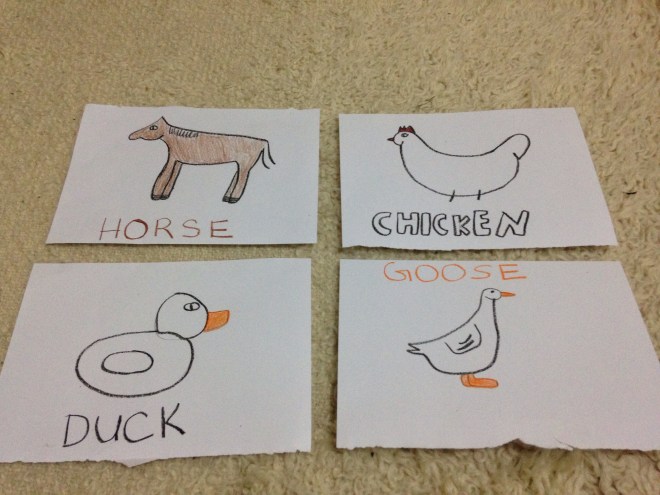
This summer, my teaching group and I did a lesson on animals, where we created these flashcards.

IMG_3166

A fun game to play is to have students create two lines. Then, students step to the front of the room two-by-two. The teacher holds up a flashcard and the first student to say the correct word wins a point. This game can be adapted to any subject.

For teaching time, I created these flashcards, where students have to match the time to the correct clock.

teaching-time

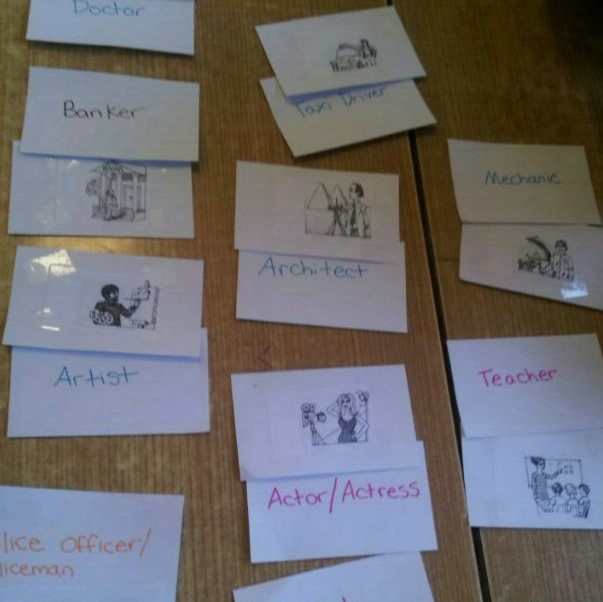
Some of my younger classes were struggling with learning professions. Using their workbook, I cut out drawings of different professions (since I hate to draw/am bad at it) and taped them to index cards. Then I wrote the names of the professions separately on another set of cards. Students then played a memory game where they had to find and match the correct word/picture. This can also be adapted to any subject.

tefl-flashcards

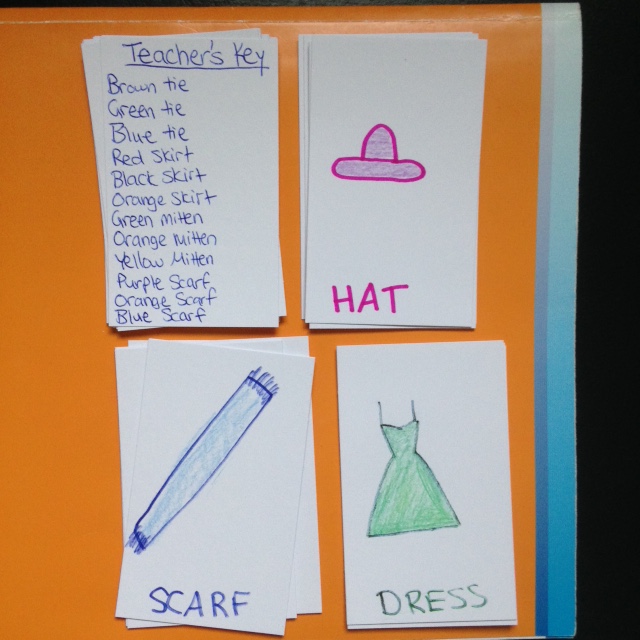
Last, I created a flashcard set of 30 different pieces of clothing (with each piece colored in three different colors). These can be used in two different ways: 1) Give each student a card, and then ask them to stand up when they hear their clothing piece/color called. For example, “If you are holding the purple hat, stand up.” Or, for smaller classes, you can spread all 30 flashcards on the table, and ask students to gather around. Then, call out a piece/color, and see who can find it the fastest. Example: “Who can find the purple hat?”

clothes-flash-cards

This summer, I worked with my friend and fellow volunteer Chelsea at a 6-day English camp. She created THE CUTEST bear paper dolls (Chelsea loves bears) with little outfits. Students had to dress the bears appropriately, according to the season/weather. (I am trying to convince Chelsea she needs to start a business where she creates a line of bear paper dolls .. we’ll see how that goes. 🙂 )

bear-paper-doll
Created by Chelsea Coombes
bear-paper-dolls
Created by Chelsea Coombes

There are probably countless ways to use flashcards in the classroom, but I wanted to share what I have used and seen used so far. If you are an ESL/TEFL teacher, I hope you found this helpful!

Guest Blogger: Sam Green (A Single Story)

Hi, Everyone. I asked my friend Sam if he would write a guest post for my blog. Sam is not only the first man I’ve asked to post, he is also the first person to write about Peace Corps Kosovo’s Community Development program. Enjoy! –April

***

A Single Story

In Peace Corps there are several phrases that are repeated so often during training that they become ingrained. The one that’s stuck with me is “single story”. During training they refer to single stories in a few different ways. Primarily in the context of the recent conflict in Kosovo, and that when you hear a story of what happened in the war whether from an Albanian or a Serb, it’s key to remember that you are only hearing one perspective. But they also use the same term when talking about how each member of our cohort will have a completely different experience from the others.

I have been realizing how very true this is, as we have started at our different sites and organizations. I will be getting a unique experience. I am the first volunteer to working with a Roma organization, and I am living with a Catholic host family in a predominantly Muslim and Turkish melting pot. The languages on the street range from Albanian and Romani to Turkish and German.

In addition to the English teachers we have in Kosovo, like the amazing April, we also have Community Development volunteers. The community development sector in Kosovo has many wide-ranging goals, but at its essence we are here to help build capacity within NGO’s and civil society organizations. I’m currently facing the challenges that will come with working and living within two different minority communities. I’m excited to see Kosovo from their perspective.

peace-corps-kosovo-community-development-program
Photo by Sam Green

The largest challenge I’ve faced thus far has been language barriers. No one within my organization speaks English and my Albanian skills are sub-par. I’ve been taking Albanian tutoring and this week am starting with a tutor to learn the Romani language. It has been very hard to express myself to my counterpart, when trying to speak about vision or strategic planning through my limited Albanian and Google Translate. In an effort to do something meaningful with the rest of my time, I’ve started an English club with some secondary school students. I am daunted by the challenges ahead of me, but I look forward to overcoming them and can’t wait to be able to tell my single story.

english-club
Photo by Sam Green

Other guest bloggers’ posts: