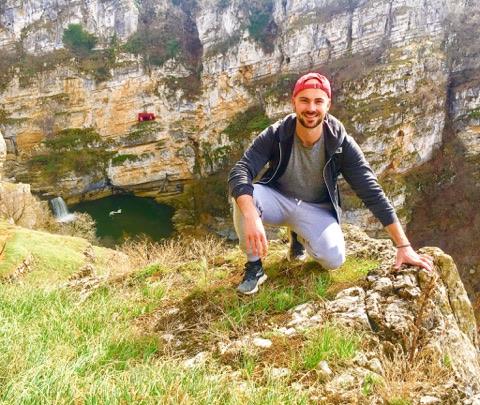
April’s note: The following guest blog post was written by my friend Christian, who is choosing to extend his Peace Corps service.
This week is our close-of-service conference, a reflecting period on our two years here and marking the final sprint of our 27-month service. In 60 days, most of my peers will pack up and begin returning home to new careers, new lives, and wish lists of missed foods. However, I elected to continue my service for a third year. I choose to stay.
Not everyone understands my reasons for staying, I think. After living and working in Kosovo for two years, I finally think that I am beginning to hit my stride. I’ve realized that this time has been a relatively short period to adjust and integrate into a new culture and where my weeks are still marked new discoveries. Extending my service will allow me to continue with my work which I feel is making an impact. Formally switching into the “Community Development” portfolio allowing me to work with several non-governmental organizations and Kosovo’s vibrant youth culture. There are dozens of organizations filled with young, progressive Kosovars that I would have the privilege and excitement to work with as they shape the future of their communities and their newborn country.
During my service, I’ve struggled with the strict gender roles that exist within my community. Being the only male volunteer placed within a village from our cohort, which I’ve had difficultly reconciling my struggles with these gender roles since I am cultural permitted so much more than female volunteers, but exist within the same paradigm. The village’s traditional gender roles which promotes anachronistic masculinity; manual labor, football, and objectification of women exists as the basis or preface of most conversations admist lingering cigarette smoke. This has always left me in a strained position because this is not me. I don’t typically do manual labor (though I’ve chopped wood with a teacher once before, much to my community’s delight), I’m bad at football, and cigarette smoke leaves me nauseated. This has left me feeling alienated when I don’t align with the male sphere and a more sensitive sphere is not an option. Though spared the strict cultural boundaries of a woman, inclusion in the permitting café culture promotes a natural separation. Familiarity always ends at the family home.
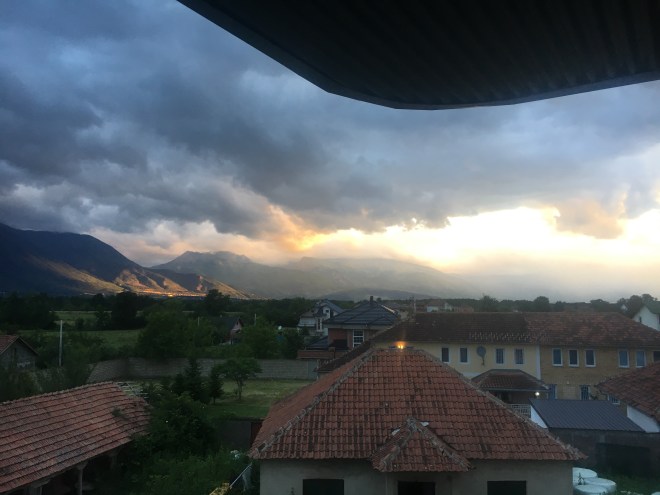
Christian’s village (Photo is courtesy of Christian)
I’ve tried addressing these challenges by working on learning the history of my village. My village was occupied by Serbian forces and sustained American bombing to dislodge them. Every summer, Halo Trust searches the various nondescript fields that comprise the village for the unwanted remnants of the war. Amenities such as water and electricity, everyday utilities that Americans and other developed world citizens take for granted, are relatively new to the village. Both of which were installed by USAID in an effort to rebuild the village and Kosovo in the post-war period. I have found my own solace with my difficulties by remembering theirs and their small, but significant gestures of showing me that I’m welcomed in their community, an honor that many wouldn’t receive.
Extending my service will require me to leave my quiet, farming village into the city of Peja. I adore Peja. I like the frequent rains and sipping makiatos by the soaked windows and walking between the scintillating trees and their ladel like leaves. Watching the fog banks roll down the mountains every morning and the blueish gray tones of the overcast skies melding with the light of Rugova Canyon. How the city exists almost in tandem with the nature around. The street dogs resting in sun lite patches through the parks’ canopy while the gyjshit nap on the benches, both in their usual spots. The gyjsha at the hole-in-the-wall pasta shop and how she slips between speaking Albanian and Dutch effortlessly, a skill she learned from husband who she met while studying cooking in Sardinia. Staying would let me become part of this dynamic rather than an observer.
One of my motivations for joining Peace Corps two short years ago was to experience something different. Initially I was offered or interviewed for several posts; Jordan, Armenia, Ukraine, before fate aligned with Kosovo. During our COS conference, I’ll reflect on my village and the conclusion of my tenure here. The surprisingly vivacious topic of whether I am a “Berisha” or a “Gashi” (both are local family names). The innate skill of knowing which cows belong to which family. Knowing where the spring puppies will be hiding, nestling into the wild grass for its generous reprieve from the heat (This is behind the mosque and next to the barbershop if you must know). The villagers giving me assorted squashes and gourds from the back of their tractors from their autumn harvests. And of my creative, selfie-eager students preparing for their final year exams, trips, and prom. I was motivated to experience something different and being a member of this community for the past two years was surely that.
Note: This is the first blog post in a series I plan to do on challenges that Peace Corps Volunteers face while serving in Kosovo. My friend and I chose to write this piece using a question-and-answer format. For privacy reasons, I am referring to my friend as “Guest Blogger.” — April
April: How often do you experience racism here in Kosovo?
Guest Blogger: On any given day, I can generally expect to receive at least a small handful of racial comments and taunts whenever I walk around my site, which is a small city of about 35,000, especially along the main road. Namely, in a large majority of cases, I’ll hear young boys and men between the ages of 10 and 30 say in Albanian, “Ohhhh, China!” “Chinese guy” or “Japanese guy,” and make fake Asian language sounds in my direction.
There’s an old guy who’ll pretend to do what he believes is kung fu whenever we cross paths every once in a while. Though such an action is so blatantly racist, I find it kind of amusing.
The taunts and remarks I hear with much greater frequency, on the other hand, are just outright offensive and tiresome. I’ll also have people ask me about whether I’m from China, Japan, or Korea with regularity. Though understandable, such a question never ceases to be irksome because I’ve heard it my entire waking life. I hate this part of my service, but I don’t know what else to do but accept and adapt.
I’m so grateful that I’ve never ever experienced any racism from those whom I’ve had to work with closely and live with. They’ve always offered me the utmost respect from the very beginning for who I am and what I do for them and their community. When they’ve judged me, they’ve judged me by my attitude, words, and actions, not my skin color.
April: If you are able to look at your experiences objectively, how much of what you experience would you say is outright malicious, versus people being curious about you and perhaps just expressing their curiosity in an annoying but non-malicious way?
Guest Blogger: I think it almost always the latter. Because Kosovo is so homogeneous racially, socially, and culturally, I realize that the people — overwhelmingly young men — who direct racist remarks at me do not know any better. In other words, they act improperly in the eyes of many because they haven’t had exposure to other races and cultures and any direct personal interactions with non-Albanians. They literally lack the knowledge. In fact, “racist” doesn’t have much meaning as an epithet here, and I think it’s fair to say many Kosovars would struggle to define race and diversity.
For instance, I bet those who make fake Asian sounds at me do so because they’ve seen Asian characters, or Asian-like characters, act a particular way on TV and in movies and automatically assume that all other Asians on this planet must talk and act the same way. Jackie Chan, in this regard, has been a blight on the depiction of Asian people and Asian culture in mainstream culture. Hence, I hear young comedians-in-training call me “Jackie” here and there as they pass me on the street. They think they’re tough and clever — and they’re not! They’re pathetic — and I do wish I could stop them in the middle of the street and deliver some grand lecture that will open their minds and change their behavior right then and there. However, such a thing is impossible.
I do not think people who act in such an irritatingly shallow way mean any harm. However, I still cringe and — depending on my mood at the moment — might even feel hurt and become pissed off whenever I hear such racial remarks. I feel hurt because racial taunters in Kosovo say the same things classmates and peers who picked on me because of my race said to me as I grew up in a predominantly white suburb in Northern New Jersey. I’d prefer to have not daily reminders of this aspect of my life in elementary school and middle school. I become pissed off because I believe, in light of their country’s recent history, all — and I do mean all — Kosovars should know much better than to judge people based on their race and ethnicity. You do not need to know English or to have studied abroad to have such a perspective.
Generally speaking, no matter where they are from, I believe people in this day and age where there is unlimited access to information and knowledge should know better than to judge others by their race and racial stereotypes. I feel it’s my solemn duty as a PCV working in local education to help Kosovo’s youth gain such knowledge and discover their own insights on diversity and multiculturalism that many of their peers in other countries know to be self-evident truths.
April: Is most of what you experience verbal? Have you ever felt physically threatened in Kosovo due to racism?
Guest Blogger: All of the racism I’ve experienced has been verbal. Kosovo is an exceptionally safe place, and I’ve never felt physically threatened or uncomfortable in any place at any point during my service. Still, living in a place where people will judge me on my appearance and act on what I suppose is an impulsive need to remind me how I look is unpleasant and unwelcoming. The community integration process is difficult enough in general for all PCVs and is compounded when they look so different from everyone else in the community. The people here take such pride in how welcoming they are, especially internationals. In some ways, I’ve never been treated better at any point in my life in any place and will likely never receive such hospitality outside of Kosovo. However, when this blissful bubble bursts after I hear a racist remark directed at me, I can’t help but wonder how welcoming they really are to all internationals, not just those who could pass as Albanian.
April: Would you feel comfortable sharing the worst instance of racism that you have experienced?
Guest Blogger: I can’t really say that I’ve had a “worst instance” of racism in Kosovo. I want to say that all of them are bad because racism is racism, no matter the intent. Still, it’s unreasonable for me to say that all instances of racism I’ve experienced are equally bad. Some Kosovars genuinely thought that they were speaking Chinese with me when said “ching chong chu” at me, and admitted that it was a misunderstanding on their part and begged for forgiveness of their ignorance. Also, if they really sought to be racist, they could’ve called me something much worse like “Chinaman,” “chink,” “gook,” “jap,” or “yellowman.”
Two instances still stick out to me. One time is an older waiter at a tea house slanted his eyes at me when I walked in the door. I wanted to berate him, but what I figured that such a reaction from me would achieve nothing positive. He doesn’t speak English, and my Albanian wasn’t good enough at the time to offer him a lesson on racial and cultural sensitivity.
Another time, another “tough guy,” which is a personal term I use to refer to young men who make racist remarks at me in passing but don’t own up to it when I confront them, at my school simply would not concede he was being racist when he said “ching chong chu chu chu…” at me and refused to apologize. I suppose he struggled to understand why I would become so upset with him. I found the refusals to acknowledge any wrongdoing and to apologize to be even more offensive than the racist remark. This case is still the only time — and I sure hope the last — where I’ve taken a student to my school director’s office for disciplinary action. Teaching at my school is difficult enough because of my students’ generally weak academic abilities and widespread disrespect for all teachers, and I was just not having it that day.
April: What are some strategies you have used to avoid experiencing, or confront, racism?
Guest Blogger: I simply actively choose to ignore racist remarks and carry on as if I heard nothing. I know that sometimes giving the taunters attention can make things worse because I am reacting the way they want me to. No action is, in fact, oftentimes the best course of action when I know I’m receiving racist taunts from people I don’t know, who likely do not know English, who likely wouldn’t understand me in Albanian, and whom I likely won’t see again anytime soon.
I generally have headphones in whenever I’m out and about in my town, which I find to be another effective avoidance technique. Nevertheless, I can still hear “tough guys” taunt me sometimes, either because they shout that loudly at me, or because I’ve become so attuned to racism that I can hear it over the music and podcasts I listen. Though not easy, I bite my lip, keep looking ahead, and continue on my way as if I heard nothing. I believe they simply want the attention and the satisfaction my attention brings them, so I’m not going to indulge them.
Whenever I feel I must respond, I simply shout “No!” back at them, wag my finger, and shake my head in disapproval as I walk away. They get the message, great! If not, oh well …
For those who have the language skills and willingness and openness to have a discussion about racial diversity and racism, I try to use their remarks as a teaching moment to explain how their words are, in fact, racist and why they are offensive and hurtful to me and many other people who look like me. To drive home the point and help them to feel the pain I feel when others mock me for being Asian, I’ll mention how the movie Taken depicts Albanians extremely negatively and ask them how they would feel if I assumed all Albanians are criminals based on this one well-known cultural depiction of Albanians. No one likes to be pigeonholed in such a way. I have found establishing such common ground on negatives leads to positive and enlightening discussions about our worldviews on both sides.
April: Why do you think some people in Kosovo say and/or do racist things?
Guest Blogger: To reiterate what I said earlier, I think some people in Kosovo make racist remarks because they do not know any better. They might not even know what racism is, and, therefore, would not feel badly if called racist. I want to emphasize that I do not think they should receive much blame, if any, for acting insensitively because of Kosovo’s homogeneity and isolation from the rest of the world. They haven’t learned before and interacting with a person of color is a golden opportunity to take a first step in the learning process.
April: What advice would you give to someone who isn’t (or doesn’t look) Caucasian and is considering serving in Peace Corps Kosovo?
Guest Blogger: I have a couple of suggestions:
1) Please pardon the puns: I advise finding your own ways to grow a thicker skin when confronted with racism and other comments and questions about your identity. The less you allow racism to get under your skin, the less stress you’ll create for yourself — generally speaking. In these cases, sometimes no action is the best action.
2) Even if you become resistant to, grow to tolerate, or even come to accept racism as a part of your everyday life, it doesn’t mean you should desensitize yourself to racism and let everything go. In my experience, I can allow 99 racist comments and taunts to slide, but then the 100th can just set me off for reasons I still struggle to understand when I look back at moments when I blew up.
I can’t say that I’ve always responded gracefully and thoughtfully to racism. When I’ve allowed my sensitivity to racism to overwhelm me, I believe I actually made the incident worse than it needed to be. More often than not, it was a case of misunderstanding on both sides. Taking a second to breathe and calm down when feeling the urge to react has helped me maintain a mental balance when I know that I have this kind of daily struggle with myself and others each and every day.
3) I cannot emphasize this enough: Try to imagine how different — and even strange — it must be for the average Kosovar to see a non-white person in their community. Outside of Prishtina and Prizren (the two largest cities in Kosovo), it’s rather uncommon for Kosovars to see people of color in their communities. I advise being empathetic to the fact that they often simply do not know how to act around non-Albanians because of their lack of firsthand exposure to different cultures and people. They’re curious and mean well. They just don’t know how to respond — yet!
4) I say yet because I’d encourage PCVs of color to use instances of racism to inform when you deem appropriate. Trust your instincts when you choose to engage others in response to racism. Something as simple as “No, I’m American” has completely changed the way others who’ve never seen me before and don’t know who I am see me. It is awfully satisfying to see them respond so positively when I tell them I’m American. Other times, I just get blank stares or expressions of disbelief. I’ve even had people flat out refuse to believe I’m American, even after I’ve shown them my passport and other forms of ID. You won’t be able to convince everyone that you’re American and that many Americans aren’t white. You’ll go crazy if you try to change everyone’s perspective. Instead, give yourself a pat on the back when you’re able, in fact, able to change even just a couple of people’s outlook on the United States in a small but undoubtedly profound way.
5) Stand your ground when others try to tell you something different about your own identity that you disagree with. Being born an American is the best thing that’s ever happened to me, so I relentlessly push back against those who’ve told me that there’s no way I’m actually American because I’m Asian. I’ve told others in Kosovo, in other countries, and even in America that I want nothing to do with them ever again because I find their refusal to accept my Americanness to be gravely insulting. Take pride in your Americanness and never let anyone tell you otherwise if you feel similarly about your nationality.
6) Perhaps most important, laugh at racism. If you take racist remarks too seriously and can’t find humor in them, then you might well do more harm to yourself than any instances of racism ever can. I believe that those with malicious intent will feel disempowered and that those who express curiosity insensitively and ungracefully will understand that they’ve something wrong more clearly. Humor can be a great uniter and method of clearing the air. Also, finding humor will make your Peace Corps experiences all the more enjoyable and enriching in other ways those of “typical Volunteers” are not. I believe Peace Corps stories are the most memorable for good reasons.
“It has long been an axiom of mine that the little things are infinitely the most important.” – Arthur Conan Doyle
Garrett Maltzan
As I reach the milestone of being in Kosovo for 6 months, I’ve found myself learning to appreciate the little things.
I’ve always approached life, and now my service as a Peace Corps Volunteer, in segments. Some longer than others, some just brief moments in time. But, when looking back at how far I’ve come and the accomplishments (and failures) that are the building blocks to the larger narrative of my life, I find that the milestones are made meaningful by the small happenings of daily life.
In my service, I’ve found that breaking things down into manageable chunks is an amazingly effective way at approaching everything from projects to goals, hardships, relationships and everything in between.
These segments are both large and small. The largest being the 27-month clock relentlessly ticking down by the second, which serves as a constant reminder that, while I am here in Kosovo for more than 2 years that time is quickly slipping through my fingers. Sometimes those seconds can feel like an eternity, believe me. But when they converge into the spontaneous interactions, or events, or successful classes, what becomes clear is that it truly is the little things within the context of milestones that makes this Peace Corps experience completely worth it.
The little things in our day-to-day lives are the key to finding meaning in the chaos of it all.
For me, some of the highlights have been:
The time I took a small group of students to a English proficiency exam along with 500+ students from surrounding schools. While none of my students moved on to the next round (though their English levels truly are remarkable for their age), it was spending the day laughing and joking in English with them, grabbing coffee afterwards and seeing them be their true selves outside of class that I will always remember.
The times when I’m walking the 45+ minutes to the gym and a Kosovar pulls over to offer me a ride and insist on driving out of their way to get me to my destination. This happens for more often now that I’m known in my village and each time opens the door to a new connection, a new friendship, in my new home.
It’s the breakthroughs in my own language learning where all of a sudden something magically falls into place and I’m holding conversations long enough and well enough to get the ego-boosting response, “Hang on, you’re not Albanian?!”
It’s the friendships I’ve built from day one when we arrived at staging in Philadelphia and fostered through the turbulence of PST and seen blossom now that we’re all at our sites. There’s nothing quite like the bond one builds with those in their cohort and I think the KOS4 group is a truly special example of how diverse and close a cohort can become.
It’s the time spent over coffee with these newfound friends venting about life. Taking a brief moment to step back and express ourselves honestly and realize how lucky we are to be serving the people of this remarkably unique place.
It’s in the ongoing afterschool course I’ve started that I’ve used to reorganize students into learning levels that fit their skills and needs, thereby allowing them to improve exponentially. I feared students would only show up to socialize rather than actually seek improvement, but in fact have been blessed to experience the complete opposite. I am most proud of the successes that have arisen from this course than anything else thus far in my service.
All in all, it’s truly the little things. Yes, I’m approaching the major milestone of being in Kosovo for 6 months. Yes, there are still plenty of milestones to go before I can even think about the end of my service. Yes, looking back, the entirety of these 27 months will be just another chapter in the narrative of my life. But, at the end of the day it’s the little things that make up my day-to-day life here that makes it a truly meaningful and life changing experience. I don’t know what tomorrow will bring. I don’t know what my service will look like a year from now. But I’m remaining present, I’m letting myself live fully in the moment and am opening myself to those experiences that I will fondly look back on and say, “Yes, that was so completely and overwhelmingly worth it.”
April’s note: This will be the last guest blog post of 2017. Read posts by other guest bloggers:
Hey, guys! I am happy to share a post from guest blogger Linnea Neuber. Linnea is the first person from the Kosovo 4 cohort I have asked to write for this blog (all my other guest bloggers have been from my cohort, group 3, or the previous cohort, group 2). I like inviting guest bloggers to post because they offer a perspective different from my own. Since Linnea is new to Kosovo (well, newer than me. I’m still new, too!), I thought she might have some interesting things to share. 🙂 -April
Linnea Neuber
When April contacted me to write a guest blog for her, I initially felt hesitant. I thought to myself, “Your ability to write is maybe 3rd grade level at best,” but the idea of contributing to such a rich and informative blog intrigued me. I’m new here (to Kosovo, not to the planet) and I really appreciate April’s interest in expanding the seasoned perspective of her blog. Being part of the “New Kid Crowd” means that I have a fresh, wide-eyed and slightly bushy tailed take on this experience. (Mostly because I have yet to experience a winter here in the Balkans, so please, everyone cross your fingers for me.)
The Peace Corps is an interesting concept. Americans are dropped down into host countries, given a bit of training and then let loose (much like Girl Scouts once they’ve been given the go ahead to sell cookies door-to-door.) We’ve left our entire lives behind (we’ve sold cars, quit jobs, left apartments and packed up everything we own into 2 or more suitcases) and now find ourselves in the shocking situation of integrating into a new culture while speaking a broken form of whatever language we are learning.
And let me tell ya, it’s hard out here.
Personally, I find myself regressing back into a state of childhood. I’ve now become more forgetful (though I always lost my phone before, I now lose it at least 25% more throughout the day. I’ve made a pie chart.) I also find that I can’t work simple machines, such as microwaves, or knives, properly anymore. And my shoes never stay tied. The English language is much more difficult for me to navigate. I have trouble recalling words that have more than 3 syllables (honestly, just now, I couldn’t remember the word “syllable”).
I love this experience but everyday is a struggle just to live and sometimes I’m not sure if I’m going to make it. I have 22 months left of me trying to figure out how to work different shower heads and sometimes I just don’t know if I have the strength.
However, there are lights at the end of this seemingly never-ending, fun house tunnel. One of these lights is my cohort, the fourth Peace Corps Kosovo group, KOS 4. 150 days ago we boarded a plane to Kosovo after meeting just two days before, in Philadelphia, where we bonded like a chemical reaction over delicious food and cliché icebreakers. They are my anchors in this ever-changing tide.
Other lights include my host family, my counterpart, and my new found friends at site that praise me for speaking even a little Albanian and who help me navigate my new home. Any time I feel down, I think of all the children in my classes who clap for me when I walk in to teach, or who laugh when I make jokes in English even if they don’t understand them (like the true saints they are.)
The truth about the Peace Corps is that it’s difficult, mentally and emotionally exhausting work. Any expectations that I had 5 months ago have been completely blown away. A tornado has whipped through my life and left me in a little house with red shoes under it. I’m an entirely different version of myself, complete with Technicolor. And increasingly everyday, I’m optimistic that this yellow brick road ahead of me will take me to great places, complete with knowledge of a thousand different shower heads.
April’s Note: My friend Nicole asked me to write a post about gardening/agriculture in Kosovo. Since I don’t know much about the subject, I decided to outsource her question. Below is the account of one of my fellow volunteers, Garrett Wheeler.
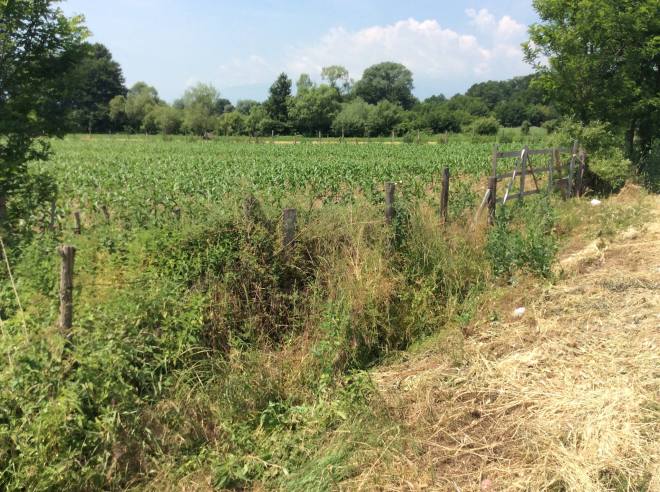
With the advent of spring arises a slew of tasks pertinent to raising crops. After months of neglect, farmers begin restoring fields marred by frigid weather. Makeshift fences, comprised of wood and barbed wire, oft become loose or fall apart on account of the wind. A pair of pliers, hammer, digging bar (an instrument somewhat akin to the crowbar), and U-nails are needed to mend damage accrued. While pliers pull and twist wire until taut, U-nails are driven into wooden stakes. The digging bar, aside from punching holes in the ground, may act as a sledgehammer fastening poles that have wriggled free.
Photo courtesy of Garrett Wheeler
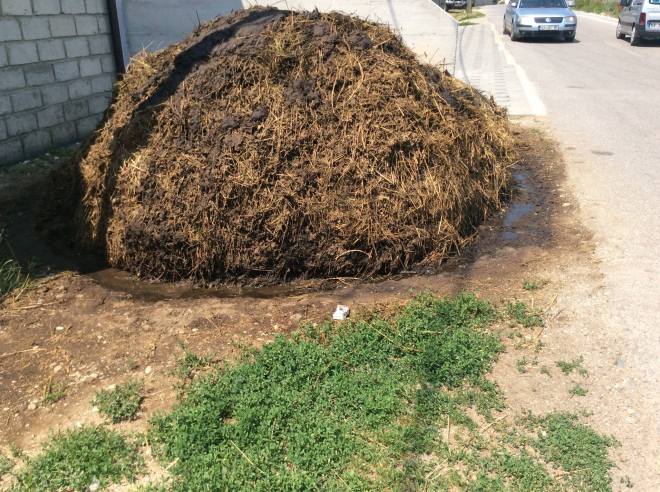
Upon completion of maintenance, a far more grueling chore awaits; fertilization. As a tractor, equipped with a trailer, positions itself near the accumulated pile of manure, workers, with the aid of pitchforks, start the loading process. Though precautions, like gloves and rain boots, are taken to promote cleanliness, the job is inherently dirty. It is not uncommon, for example, to have dung flung your direction; especially when fatigue sets in. With the trailer overflowing, tractor and crew make their way to the field. While the tractor cruises at a leisurely pace, compost is scattered left and right. A sore back and tired arms are typically awarded to all participants.
Photo courtesy of Garrett Wheeler
In preparation for sowing, a plow is hauled the entirety of a field leaving neat rows of finely ground soil in its wake. Utensils for digging are then used to create holes. As one punctures the earth, another trailing behind deposits seed. Corn and beans are planted simultaneously. While maize grows upright, the latter coils around adjacent stalks. A nearby stream supplies water when barred.
Gleaning of produce occurs in September. Hefty bags are carted and stuffed with brown pods. Those still green are unripe and need not be plucked. Though the weather may be warm, long sleeve shirts are worn to prevent cuts (maize leaves possess jagged edges which tear skin if brushed). Work is long and tedious requiring numerous days to complete. Corn, conversely, is harvested quickly. Buckets filled to the brim are dumped in a close by trailer towed by a tractor.
Photo courtesy of Garrett Wheeler
Beans reaped must then be strewn across a tarp and left to bathe in the sun. After several days, or when the shells become hard and brittle, the heap is battered with the shaft of a rake. Empty husks are then brushed away revealing seed below. Once the product has been gathered in containers, it is transferred to empty sacks. Prior to dumping, however, it is necessary to remove remaining debris. As one individual focuses on slowly pouring beans, the other uses a leaf blower to flush out unwanted material.
Within the next couple of weeks, sorting ensues. Spilling small sums onto a flat surface, beans malformed or gnawed by insects are discarded. What remains is either stored for consumption of whisked away to the nearest city and sold. Corn, depending on its strain, has two locales. A small granary houses a variation more red in hue used as fodder for chickens. Yellow corn is sent to the second floor of a neighboring building. A machine adeptly removes kernels dispelling bare cobs.
[April’s Note: Hi, guys! My friend and fellow volunteer, Chester Eng, wrote the following post.]
If I have learned to do anything in my eleven and a half months in Kosovo, I have learned to keep a looser and more flexible schedule knowing that I could well have to change it at any moment. I realized early on after I swore in and moved to my site that, more often than not, the more I try to plan ahead and set a rigid personal schedule, the more likely my life will feel chaotic. Paradoxically for me, the less I try to set things in place, the more in control I feel.
Because I have found that people in Kosovo tend to make arrangements on short notice, or even spur of the moment, filling the spaces in my schedule as my days go has become my new modus operandi with a large number of my host country national friends and colleagues. Set and structured schedules, in my experience so far, are simply not common among Kosovars. The people here tend to treat time with greater open-endedness and flexibility, which has both merits and faults that are subject to great debate. In any case, there is no doubt that the pace of life in Kosovo — and in the Balkans at large — is remarkably slower than that in the United States, especially on the East Coast, where I grew up and had been living before I arrived. What happens in a New York minute likely takes well over an hour in Kosovo — on a good day under ideal circumstances. I am used to having lots going around me all at once and setting things in place in order to maintain order amidst chaos.
This personal adjustment to Kosovo time was not easy for me because I enjoyed filling my days and evenings with interesting and productive activities well in advance — mostly because of my OCD and partially because of society’s ostensible expectations of me — and maintaining a clean and organized personal schedule. I still keep an informal planner for reminders but no longer for appointments because I can now assume they will go much longer than expected. It is not hard for me to forget when and where I will have a meeting when I have blocked an entire afternoon for a cup of coffee.
One other significant way I have had to be Peace Corps flexible and adaptable during my near year in Kosovo is accepting that no matter how well prepared I am for anything, I can never fully be ready for what will happen. I should expect things to be exactly how they are as I have heard and learned from various sources plus more. I have come to accept that the only thing that is predictable about my service in Kosovo is unpredictability. I have found I have been able to improvise way better than I ever expected myself to be able to do in a previous life. Again, please credit (or blame, depending on your view) my OCD and society’s ostensible expectations that place premiums on predictability.
No matter how well I believe I have adjusted and integrated, I know I am still learning to be flexible and adaptable. Kosovo has changed me much more in a relatively short period in more ways than I will ever be able to change it in a definitely long period.
My school’s prom is the latest and greatest instance that shows that, no matter how far I think I have progressed in the integration process necessary for productive service, I still have much more to go than I previously realized. Taking from the lessons I have learned in Kosovo, the less I try to predict and expect, the more at ease and even in control I feel.
I currently teach 11th and 12th graders at a high school for economics in a small exclusively Albanian city. This week is my 12th graders’ final week before they begin the next chapters of their lives. Like lots of 12th graders around the globe, my 12th graders had been looking ahead to the future rather just focusing solely on the present, most especially prom night.
Because I still can never quite kick old habits and will always be a naturally curious person, I wanted to know what prom night in Kosovo is like. Local friends told me that, in general, I should expect prom to be like a traditional large Albanian celebration at a banquet hall with lots of dancing early and often to exceedingly loud music that shakes the floor and walls and will leave your ears ringing and head throbbing for days. Like April, I have been to two such large celebrations (a cousin’s engagement and Teacher’s Day) during my time here so far, so I knew what to expect in this department. I was caught completely off guard the first time and used the lessons learned to help myself celebrate better my next time around.
Dressing nicely is a big social must in Kosovo and looking especially sharp for big celebrations is an even bigger social must in Kosovo, which is why local friends also told me to expect my students, especially females, to be dressed in their absolute finest. The boys will dressed formally, while girls will wear gowns and full makeup.
Because of my existing knowledge and experiences related to large Albanian celebrations and prom in the United States, I felt as if nothing they told me was beyond the realm of my imagination. Even with a student body as large as that at my school and the crowd that would follow the students before they enter the banquet, I figured that I likely would not be too surprised by anything I would experience during my first prom in Kosovo and first prom overall as a teacher ever, even if it is initially confusing and even overwhelming.
Considering how many students were going to attend the prom, how big Albanian families are, and how close they are, I figured that there would be a pretty sizable crowd to see off the students as they entered the restaurant.
Going into my school’s prom with informed assumptions and expectations was a mistake and illuminated how much more I must learn before I can say with assurance and without many conditions that I have integrated into my community.
I could not have imagined such large crowds gathered before the entrance.
For a couple of moments, being around so many people made me feel as out of place as I felt when I first arrived in Kosovo last June.
I felt a tremendous sense of relief when my school’s assistant director emerged from the crowd and took me to the spot at the restaurant entrance where our colleagues had gathered. I am usually glad to see my colleagues day in and day out. I felt genuinely happy to see them at this moment. When around so much unknown, to be back with the familiar was catharsis.
The strange feelings I get when I see the unexpected crept back immediately when I began to recognize my students dressed to impress like I had never seen them before.
Even though learning their names took a while and required major effort, I learned their faces quickly and easily. I felt genuinely distressed that I could not recognize them the young men and women I had seen day in and day out over the past eight months — most especially my female students.
...
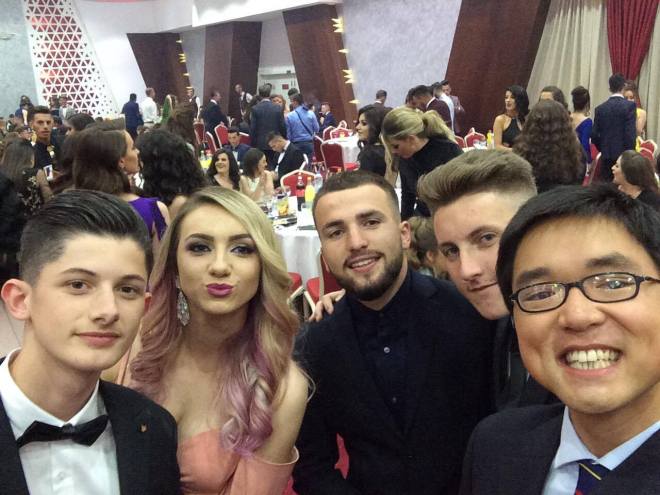
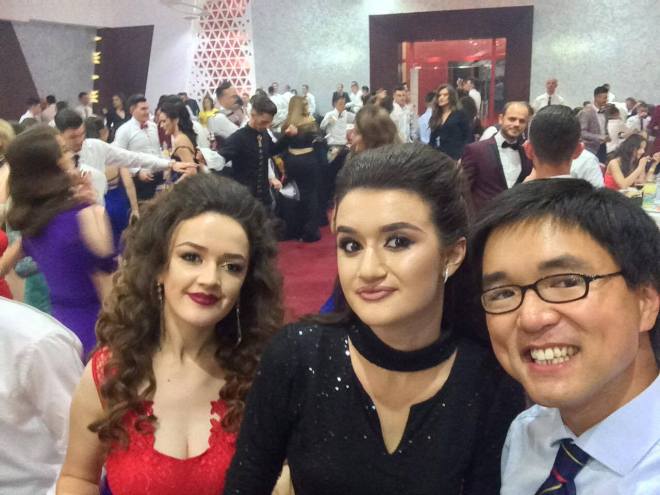
As expected, I could not walk in any direction without being asked for a picture or a selfie with students. My cheeks still hurt from all of the smiling I did on my Monday night.
Eventually, after taking so many pictures with them and just being around them looking so differently, I had little to no trouble recognizing my students, not just calmly sitting at their assigned tables and enthusiastically taking pictures with each other and with students, but even exuberantly dancing as if there was no tomorrow from the moment the earthshaking music began.
I believe it is safe to say that the students were eager to circle dance like they had never circle danced before and they had plenty of reasons to feel this way.
Region to region, city to city, and village to village, Kosovar Albanians differ in lots of ways. When talking about people from other places, as a general objective non-judgmental observation, I have found that my Kosovars friends will typically highlight the differences more than their similarities. But if there is one thing that they all have in common I think it is a love of dance and I believe my school’s students made the case that they love to dance just much as their fellow Kosovars.
These pictures you previously saw do not quite capture the energy — and, of course, the loudness — that permeated throughout the banquet hall hour after hour.
I am convinced that if my school director and one of the senior teachers at my school did not request breaks from the action, so the band and singer could rest and we all could eat, the students would have just tirelessly danced for the entire night.
These videos provides a much truer sense of what it was like:
The traditional Albanian dancing I saw and partook in (more on this to come) and the music I heard were on a whole different level from what I had experienced at the engagement and on Teacher’s Day. I knew to expect something similar but yet wholly different and, once again, my initial expectations proved to be off.
Similar to their fellow 12th graders in the United States, along with having such dance fever, a sense of genuine joy was palpable among all students as they celebrated the end of high school, reminisced about everything they had gone through together, and looked forward to their respective journeys ahead.
Also, like their American counterparts, my students wanted the best music possible on their big night. Much to their delight, my students had the great pleasure and privilege to have Afrim Muqiqi, the most highly regarded tallava singer in Kosovo, perform on this most special occasion. Muqiqi, who is originally from their region, is such a big deal that he easily earns 4000 to 5000 euros per performance. To understand how much money this amount is in Kosovo, the average Kosovar earns just over 10,000 euros per year. People who make 2,500 euros monthly are considered to be rich by local standards. Considering how much they clearly enjoyed his music, however, the students made clear they believed having Muqiqi on prom night was worth every cent.
Other than placing great sentimental value on the event, wanting the best music possible, and dancing like nobody’s watching, there is not much I could see that proms in the United States I attended as a high school student and this first prom in Kosovo I attended as a high school teacher have in common.
There were slow dances on two occasions, but, other than a small number of student pairs who did the typical slow-dance dance with some considerable distance between one another, they were strikingly different. First of all, the slow dance music was still loud enough to blow out your eardrums. Also, many more students slow danced in much larger groups. These groups had have about a dozen students standing in a circle as they swayed side to side for several minutes.
Unlike the prototypical American prom, no students at this Kosovar prom were crowned the king and the queen of the prom. Considering the way the schools are set up here where students do not mingle as much as those in the United States, I do not think the students at my school know each other well enough to be able to bestow such honors on just two students.
Instead, during the breaks in the music and dancing, my school director conducted ceremonies where students received awards for major achievements in the classroom, such as highest average in the class, and on the field, such as best football player.
Besides using them as opportunities to celebrate my students’ accomplishments with them, I also these personally much-needed breaks (despite my best efforts and my youthful appearance, I could not quite keep up with my students on the dance floor) to eat and rehydrate. By appearances the food was completed as I expected: grilled meat and bread. I shuttered to think about how dry and unsatisfying my dinner that evening would be.
The tenderness and actual flavor of the meats pleasantly caught me off guard and I actually genuinely enjoyed my traditional Albanian celebration meal for the first time ever.
Even though I and colleagues had to enjoy it without the luxuries forks provide, the beef slices I had on prom night were by far the best I have had in my community thus far. Beef here is typically dry and flavorless, so having tender beef was another pleasant culinary surprise for me.
The most pleasant surprise of the night for me was better than any of the food served. Please note I will typically choose food first and foremost as the main highlight of a major celebration. Also, please note that I do not particularly enjoy the traditional music at traditional Albanian celebrations. Sorry to let down those who were counting on me.
However, in this case, I must say that I will likely not enjoy hearing traditional Albanian celebration music as much as I did at the beginning of the last hour of prom because I had the pleasure to see one of my students perform in front of the entire restaurant with all eyes and ears directed in her direction. I knew she could sing and have even heard her sing on one occasion when my counterpart more or less forced her to sing in front of her class, even though she did not really want to. Because she is also a fairly shy and overall mild-mannered young woman, I would not have imagined her taking the big stage on the biggest night of her high school life. Here is genuinely hoping that she will get more opportunities to sing for even bigger crowds on even bigger occasions.
I wish I had a video of her singing, but my phone was well out of battery at that point because I had neglected to bring a longer lasting external power source that would last me the entire night. How naive of me to think that I could spend a good portion of my night sending Snaps and not drain my phone battery. I will see this class later today and kindly ask students if they will share with me a video of their classmate singing. Watch this space.
At that late hour, I finally felt I could fully enjoy the prom among the students like the students without judging myself or feeling judged by others. I love dancing, even though I dance mediocrely at best, and will find someway somehow dance to any beat, especially when the occasion calls for all in attendance to be on the dancefloor.
Because of the distant — and even occasionally cold — relationship between students and teachers at my school, I did not necessarily feel so comfortable dancing so closely with students, even though they enthusiastically welcomed me to dance with them and were delighted to see me in a new and completely different light. Because I am significantly older than they are and still their teacher, I did not want to cross any social lines that my colleagues clearly would not and did what I could to do as they did based on my on-the-spot observations.
I gladly circle-danced with students and danced within those circles with them for much of the night because plenty of my colleagues did so with glee. I cannot see a better way for a local teacher to become more human in the eyes of their students.
However, I made a point to decline to dance with male students who grabbed my arms or put their arms around me in ways I felt were inappropriate and even sometimes uncomfortable. I did not see them do that to any other male teacher and am sure they would not ever dare so either. Throughout my time teaching, I have made clear and direct efforts to show students that I am still a teacher first and foremost and expect them to show me the same level of respect they give my colleagues. I was not about to give this principle up on prom night.
Also, I avoided dancing with students all together during the 45-minute period when all of the current top pop songs in Kosovo of the past year, such as “Despacito” right now and “Bon Bon” almost a year ago to the date, played as the singers rested. I am all for teachers and students becoming closer, but absolutely not by dancing together to “student music.” Gross.
I have a feeling you sense the pattern by now. Heading into prom night, I expected to have to deal with the issue of how to best conduct myself in front of my students at prom but still enjoy their event as much as I wanted on the fly. However, everything I had expected and prepared myself to face and handle changed the moment a male student whom I do not know grabbed my hands in an effort to dance with me without a prior clear sign of approval from me. I did not predict that something like this would happen to me with the knowledge and experiences I have gained so far. And some part of me thinks that I would not have been able to prepare for it anyway. I know more now.
The one part of prom I was most unprepared for was how long the night was. Because the first two big traditional Albanians celebrations I had been to did not run past 1:00 in the morning and got the impression that early morning was the threshold, I figured a Monday night prom would more or less be the same. Oh goodness was I wrong.
Though the prom began at 7:00 that evening, as hour after hour went by without any sign of slowing down, aside from necessary and natural breaks in the music, I got the feeling that prom was much more than I had expected. I will not forget anytime soon the astonishment in my voice when my counterpart told me at 1:30 in the morning that prom would last until 4:00.
The sinking feeling in my stomach I felt at that moment sapped my desire to dance anymore and to stay any longer. I felt flabbergasted by how much long prom would go when it had already gone on for so long up to that point. I felt ready to leave then and there. As much as I enjoy dancing, I will always choose sleep first.
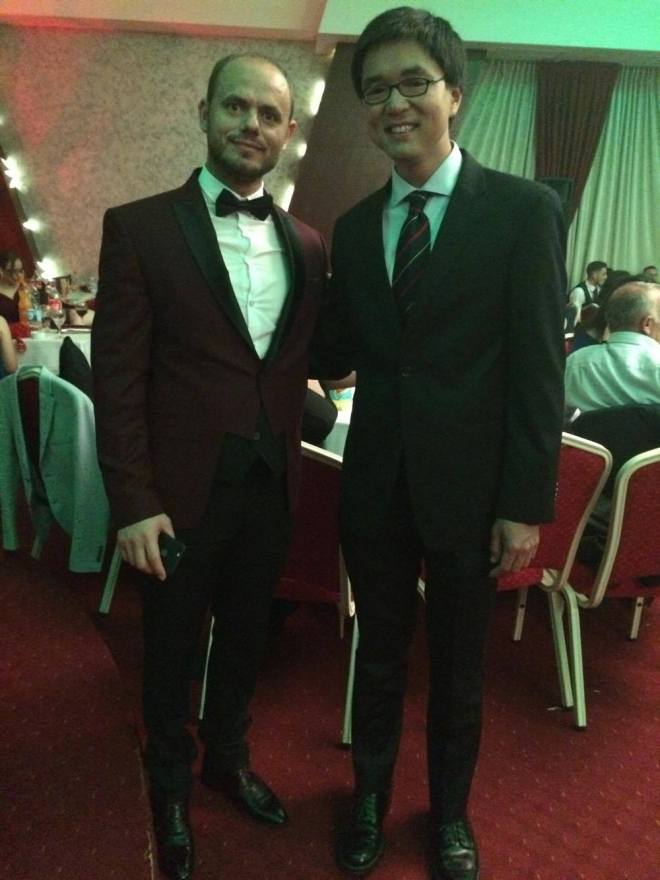
My counterpart, Fitim, and I wearing our Monday best.
Though I spent much of the next day terribly tired and sleepy and for a good 10 minutes after the end of prom gripped with fear I might not be able to catch a ride home, I am pleased with my decision to stay until the very end because of the memories I now have from that night. There is nothing that will make me feel otherwise. I preferred to take in as much as humanly possible from such a unique experience that I will not have many more opportunities to have. By staying at prom into the wee hours of Tuesday morning, I got to see my student sing and enjoy a couple of completely guiltless dances with my students as our time together draws to a close.
All in all, I had much more fun than I expected and prepared to have on prom night. I look forward to going again next year. Personal excitement is my only expectation and personal anticipation is my only preparation.
A while back, I asked my friends and family members to send me questions to answer on the blog. My Dad asked about sports and the outdoors in Kosovo. Since I’m not exactly Sporty Spice, I decided to outsource his questions to someone more knowledgeable than I. My friend Andrew has participated in a lot of outdoor fun since he moved to Kosovo. Without further adieu … –April
Andrew Bivins
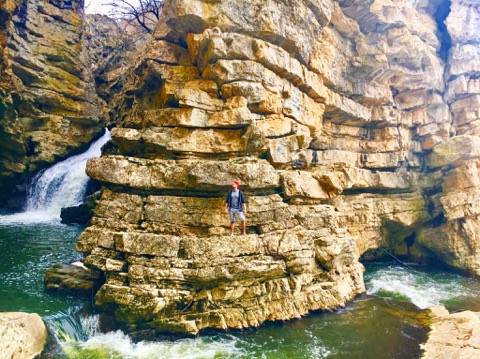
Përshëndetje! I am excited and honored to be taking over April’s blog this week. Apparently I have gained a bit of a reputation for loving the outdoors, especially in Kosovo. In fact, the nature here is so beautiful that I started documenting it, which led me to discover another passion of mine, photography.
Photo courtesy of Andrew Bivins
Back in the U.S., I was just getting into hiking and kayaking before I moved to Kosovo for my service. I am from Atlanta, so it was quite common for my friends and I to flee the city for the weekend for some fresh air on the southern end of the Appalachian Trail. I wasn’t sure what to expect once I found out I was moving to Kosovo. I had read that Kosovo was mountainous and forested, so I knew there was potential, but I wasn’t sure how accessible outdoor activities would be.
Photo courtesy of Andrew Bivins
During my first year, I went on a lot of hikes with other volunteers and we usually found some great trails on our own through trial and error. The town I live in is pretty flat, so I usually relied on my friends who live in the more rugged areas to ask around and get an idea of where we should go. Unfortunately, unexploded landmines from the war are still a concern, especially in the mountainous border regions. It’s best not to get too adventurous, unless you really know where you are going and that the area has been confirmed to be free of mines. Luckily, there are many public and private organizations in Kosovo that are actively working to rid Kosovo of mines and other unexploded ordnance. There are also a lot of resources available, such as maps and local tour guides, that will allow you to safely enjoy the nature here.
Photo courtesy of Andrew Bivins
I was talking with a local friend the other day and we were discussing how we have both noticed the recent increase in opportunities to take part in organized outdoor events. It has been amazing to watch Kosovo develop in this way during my nearly two years of living here because I truly believe that Kosovo has an incredible potential for ecotourism. Seeing that potential slowly turn into reality is pretty cool. Every week you can see new tour companies popping up on your newsfeed, advertising organized group hikes, bike rides, rock climbing, cultural tours, etc. These offers are usually at a pretty low price and they include transportation, food, and an expert guide. I recently took advantage of one of these opportunities and I went snowshoeing for the first time. We started in a village called Restelica and walked 10+ km over a mountain to the village of Brod. This was in one of the most remote regions of Kosovo and I never would have felt comfortable to do this without a guide, especially in the snow when visibility is so low and avalanches are such a risk. It was certainly a challenge, my legs are still burning three days after the fact, but it was an amazing experience. The guides were incredibly knowledgeable and helpful and I was able to learn the basics. My only disappointment is that it is the end of winter and I only just now discovered that I love snowshoeing. Next winter I plan to snowshoe as often as possible. I am also hoping to pick up skiing. I went once when I was in high school, but I would hardly call myself an expert. Kosovo is definitely a great place to learn! Depending on where you are, you can find slopes for beginners, or more challenging ones if you already know what you’re doing. I’ve also seen a lot of snowmobiles during my visits to Brezovica (the main ski resort in Kosovo) and I think it would be awesome to learn how to do that as well. With that said, PCVs aren’t allowed to drive cars or motorcycles, so I assume there is some sort of rule about snowmobiles. If you are currently serving, it’s probably just best to wait until you close your service before you give that a shot.
Photo courtesy of Andrew Bivins
I think a lot of Peace Corps Volunteers in Kosovo will tell you that winter is tough. My first winter was the most difficult part of my service. I didn’t know how to deal with it and I spent far too much time sitting inside and feeling sorry for myself. My second winter has been the exact opposite. Yes, it was still cold, but I got out as often as possible, enjoyed myself, and stayed busy. Winter was still there, it didn’t change, actually it was colder this winter, but my perspective changed and it made all the difference in the world. My family and friends back home have been shocked to see me enjoying the snow so much. I was never really a winter-type of guy, but I suppose you can count it among the MANY things I have learned to love during my almost two years in Kosovo.
April’s Note: If you enjoyed Andrew’s beautiful pictures, please follow him on Instagram: instagram.com/seekosovo
“Love does not consist of gazing at each other, but in looking outward together in the same direction.” — Antoine De Saint-Exupery
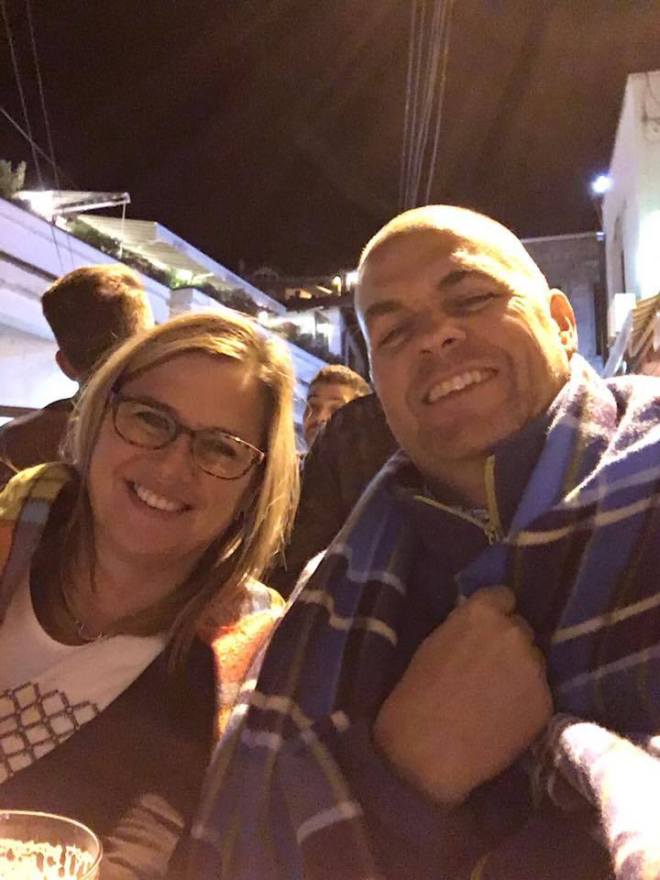
Thanks to April for asking us to be guest bloggers on what it’s like to serve as a married couple in the Peace Corps. As one of two married couples in our cohort, we are probably having a different experience than our fellow volunteers.
Some background: We’ve been married over 20 years, no kids, and left behind steady, comfortable jobs. We were both ready for a life and career change. It was a decision that we took very seriously, and worked through the pros and cons together. We think that when you serve as a couple, you both need to be all in because if one person has reservations, it’s going to be a difficult experience for both of you.
Pre-service training (PST) was the biggest challenge of our service. Peace Corps required us to live separately (different home/different village) for our first 3 months of training. We knew this going into our service, so it didn’t come as a surprise. And while it did allow us to have our own, separate experiences while developing our own identities within our cohort, it was definitely a very challenging experience. PST has a lot of ups and downs and when you are used to sharing those types of life experiences with your partner, and he/she isn’t around, it can be difficult. While not being able to see your partner whenever you wanted was difficult, we will say that the PST set-up did allow for a lot of interaction. Our villages were only a few miles apart and there were plenty of hub days or sector training that, for the most part, we were able to see each other in person more often than not.
Once we finished PST, however, a sense of normalcy returned. We resumed living together, cooking for ourselves, having similar schedules and just a feeling of being a married couple once again. Some advantages of serving together is that you always have someone to hang out with, whether it’s at the café, at home, dinner, or simply riding the bus. We are in the same sector so we have that in common, and we even share tutoring lessons. We always have a travel partner. Loneliness isn’t as big of an issue as it may be with other volunteers. In the winter, the advantages are even better—never underestimate the power of body heat in an unheated bedroom.
However, there are some disadvantages as well. Our language learning isn’t progressing as quickly as we would like as we always have someone to talk to in English. As a married couple, our host family gives us plenty of privacy so we probably don’t have as much interaction as many other volunteers may have with their families which also hampers our language skills. We also sometimes feel that we probably haven’t formed as many close relationships with our cohort due to the fact we have a “built-in” friend. Of course, that could be because not only are we a married couple, but we’re also older than most everyone in our cohort!
Despite some disadvantages, being a married couple has only enhanced our experiences. Neither of us can imagine trying to go through this adventure alone. We rely on one another to get through our struggles and are able to enjoy small successes together. So far, our experience in the Peace Corps has been pretty much what we expected. Some ups, some downs; but all made easier by having someone to share it with.
April’s Note: Happy Valentine’s Day! If you’d like to read more from other guest bloggers, here are some links:
Hey friends, family, and readers of April’s blog! My name’s Hannah and this week I’ll be taking over for our dear and beloved April. April and I were roommates during our first few days in Kosovo, and let me tell you she’s an absolute saint. I’m so grateful that we were paired together and that we have been able to develop a wonderful friendship. Anyway, I thought I’d keep things light for my blog post and talk about two MAJOR dumdum moves I’ve made since coming to Kosovo.
The first incident that stuck with me all through summer and something my PST host-familly will never let me forget occurred one sweaty sweltering afternoon. I walked up the hill to my house after a long day of training, and I was profusely sweating. My family took one look at me and said “Oj Han shumë zheg sod, kokë kall!” However, I failed to hear kokë kall (pronounced koh-kah kall) and instead I heard koka-kol. I was so excited, having thought that my family was saying, “Oh Han, it’s so hot outside and you’re gross and sweaty, how about a nice glass of coke.” I said I would love some coke thank you very much, to which everyone burst out laughing. Turns out, kokë kall means your head is literally on fire. Thank you host family, I’m aware my face gets red when it’s hot out. The rest of the summer every aunt, uncle, cousin, and neighbor I had asked me if I wanted a coke when it was particularly hot outside…
Another incident occurred during Bajram or what is called Eid in other communities. I went to the mosque with my host sister and cousin and met up with a fellow volunteer and her host cousin. I had asked my host sister to tell me how to congratulate my Muslim family members, neighbors, and friends on finishing their fasting. She told me you could say “urime Bajram” or “perhajr Bajrami”. As prayers were winding down I began reciting my congratulatory remarks in my head. I turned to my cousin, flashed her my biggest smile and said “perime Bajram”, which translates to “vegetables Bajram” in English. My family now says perime instead of congratulations for every occasion.
One thing I learned quickly from living in Kosovo is that I could choose to be embarrassed by mistakes, or I could join in in laughing. I promise, laughing at yourself is always the better solution.
*** April’s note: You can read posts from other guest bloggers here:










 Hello from Kosovo