Narrative Writing Workshop at KosovaLive

“The theme you choose may change or simply elude you, but being your own story means you can always choose the tone.” — Toni Morrison

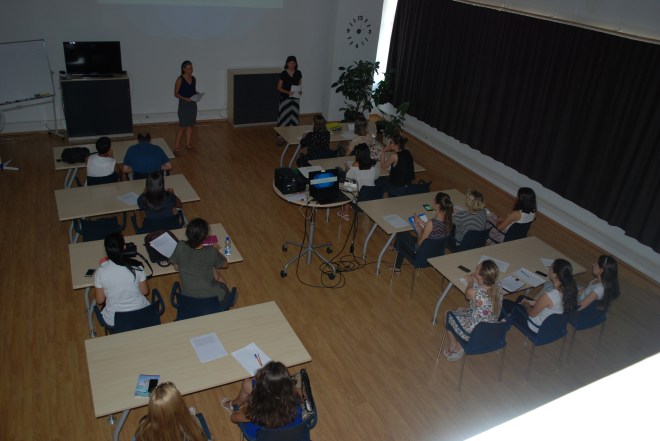
My friend, Valeriana Dema, and I had the honor of leading a narrative writing workshop at a local NGO, KosovaLive.
Our workshop focused on how we tell our stories. How do we choose what we share? How do we frame our experiences in order to find meaning?

I asked our participants, “How many people here have ever been on a date? How many people have ever had a coffee with someone new?” I pointed out that storytelling is not some lofty, academic thing. It is something we all do, every day, in order to build relationships with other people. We share our stories and tell who we 

Val found this video of Toni Morrison giving a commencement speech at Wellesley College, titled “Be Your Own Story.” If you have time to watch the entire video, I recommend it. (For our presentation, we began the video at 18:34.)

Next, we passed out an abridged version of this article from The Atlantic, titled “Story of my Life: How Narrative Creates Personality.” We allowed participants time to read the article to themselves.

After reading the article, we posed a few discussion questions to the group. Our participants shared some experiences from their own lives.

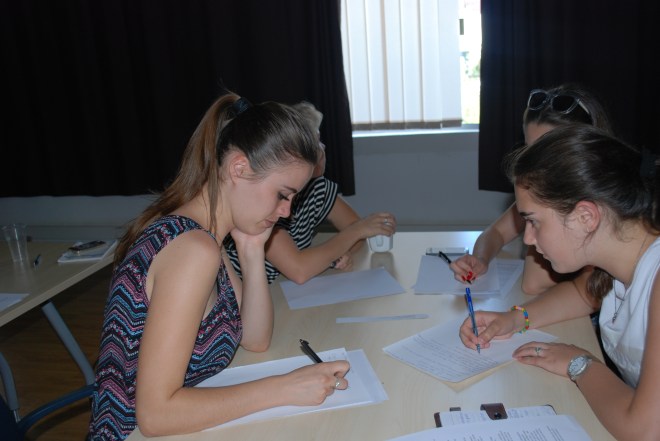
We then moved on to a group activity called “Overcoming Obstacles.” Participants divided into groups. We gave each group a slip of paper with three obstacles. We asked group members to come up with ideas of how each obstacle could lead to a positive outcome. (An example: “You failed a university exam.” Possible outcomes: You study more the next time. Or, you realize you aren’t interested in that class, and switch to a topic you would rather study.) Afterward, groups were asked to share their answers with the other participants.

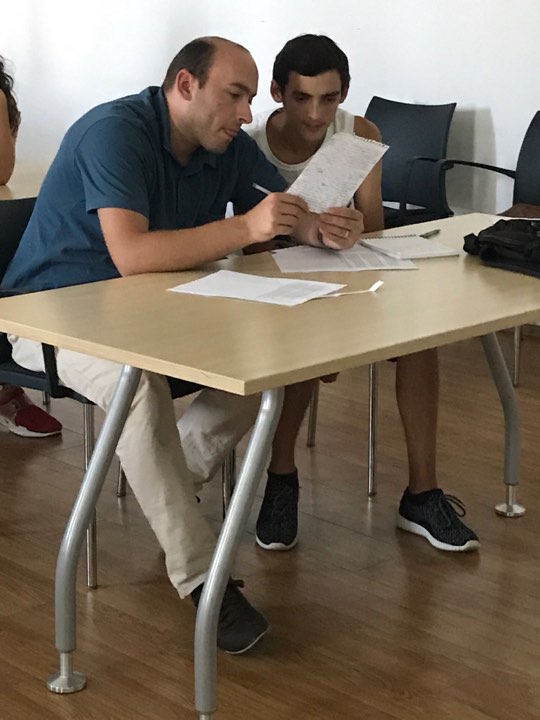
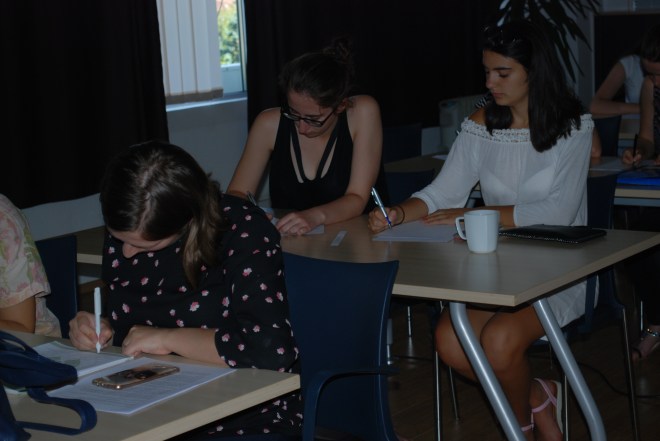
For our last exercise, we gave our participants the chance to write a narrative of their own, and share it with a partner. Val and I each shared a story from our own lives to begin. You can read my story here: For KosovaLive.

Also, here is a link to our PowerPoint presentation: Narrative Writing Workshop

We closed with a few brief remarks and thanked everyone for coming. Val and I had a great time leading our workshop, largely because our participants were so engaged and eager to share.
KosovaLive5
Photo courtesy of KosovaLive

KosovaLive3
Photo courtesy of KosovaLive

KosovaLive
Photo courtesy of KosovaLive

KosovaLive1
Photo courtesy of Valeriana Dema

KosovaLive
Photo courtesy of KosovaLive

Learn How to Play Te Rrethi, a Card Game

Do you like to play cards? Would you like to learn a card game from another country, so that you can impress your friends and family at your next barbecue, party, or picnic? Read on, because I will give you step-by-step instructions (with pictures) for how to play Te Rrethi (meaning, “to the circle”), a popular card game in Kosovo.

Te Rrethi Card Game 6

Number of Players: Two to as many as you like. You can add additional decks if you have a large group. (Note: This demonstration uses three players.)

Objective: To be the first player with no cards.

Important Thing to Note: Cards are played “up,” or in ascending order, starting with the Ace and then building 2, 3, 4, 5, 6, 7, 8, 9, 10, Jack, Queen, King, and then starting over again with an Ace.

Another Important Thing to Note: Cards are played first in the center of the circle, and then on the other players’ stacks.

Rule: If a player makes a mistake, all of the other players must give him or her a card from the bottom of their own stacks.

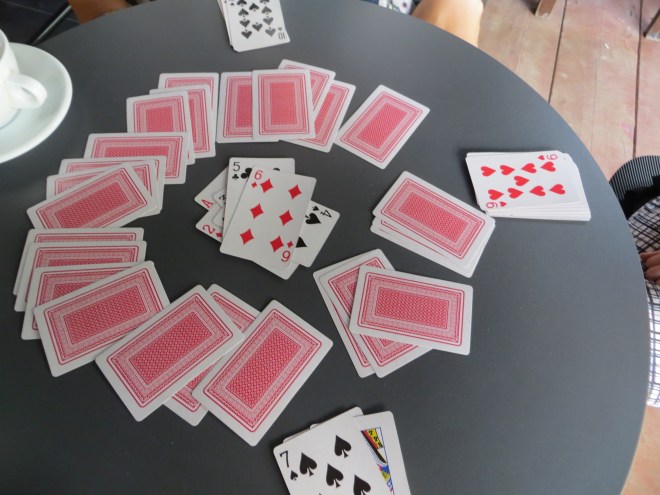
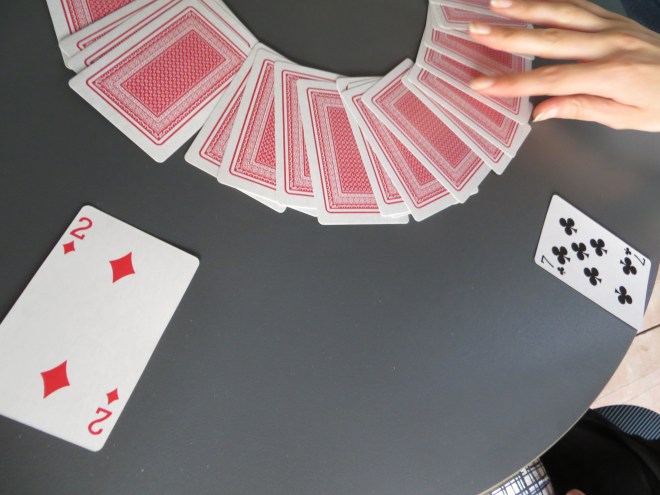
  1. First, take a deck of cards and remove the Jokers. Next, shuffle the deck and lay the cards face-down, in a circle.
    Te Rrethi Card Game 1.JPG
  2. Go around the table. Each player draws a card from anywhere in the circle, and lays in face-up in front of himself or herself. Keep going around the table until someone draws an Ace.Te Rrethi Card Game 2
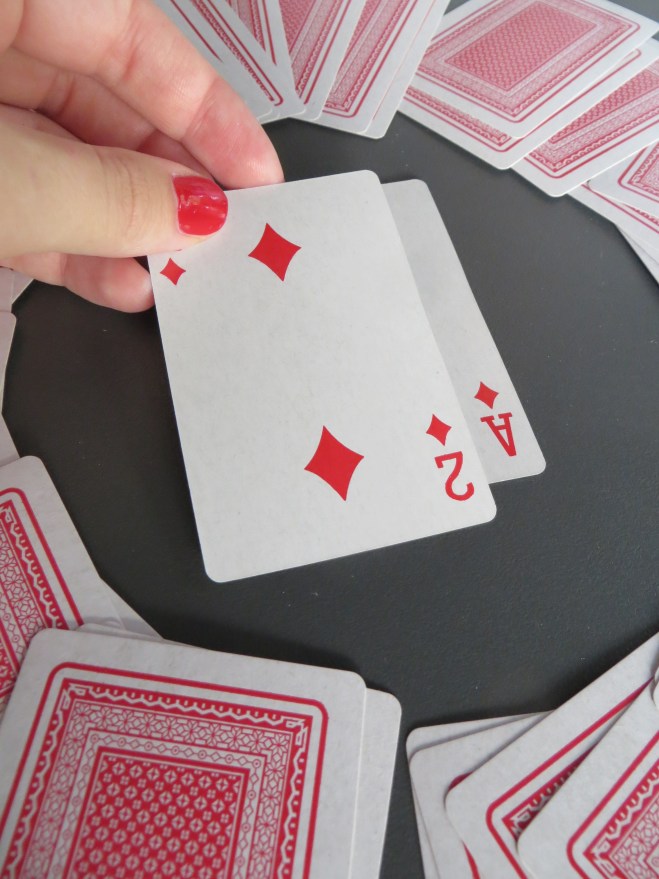
  3. The person who draws the Ace lays it in the center of the circle.
    Te Rrethi Card Game 3
  4. The person who lays down the Ace gets to play again. He or she can either play the top card from the face-up stack in front of them, or draw from the circle of cards at random.
  5. The player will either first play off the Ace in the center of the card, or will add to another players stack, or will have to discard into their own stack. (Example: I lay down an Ace in the center of the circle, and then draw a 2. I will play the two in the center. Then I draw again. Or, I lay down an Ace in the center of the circle, and then draw a 5. I see that a fellow player has a 4 face-up on their stack. I will lay my card on top of their card, adding to their pile. [Remember, the object of the game is to get rid of all your cards.] Then, I draw again. Or, I lay down an Ace in the center of the circle, and then draw a 10. I don’t see anywhere to lay the 10 [none of my fellow players have a 9], so I must discard the 10 face-up on my own stack. My turn is over.)
    Te Rrethi Card Game 4
    Remember, always play on the center FIRST, if you have the appropriate card.

    Te Rrethi Card Game 5
    If you DON’T have a card to play in the center of the circle, you will THEN look to see if you can discard your card on another player’s stack.
  6. The next player goes.
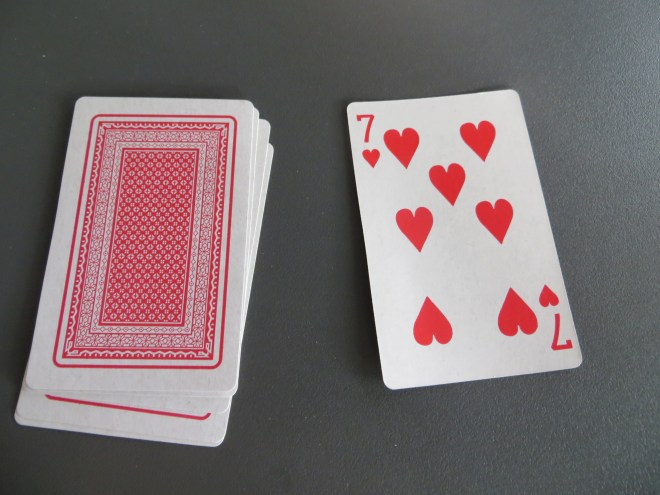
  7. When all of the cards from the circle have been picked up by the players, the game still continues. Each player will flip over the stack in front of them (so that the cards are now face-down) and will pull a card from the bottom of the stack to continue playing. (Keep repeating this step as long as you have cards. Once you have played them all, flip your stack over [face down] and again, play the first card from the bottom of the stack.) You will continue to place cards on the center stack (which was the middle of the now-nonexistent circle) first, the other players second, and your own stack last.
    Te Rrethi Card Game 7
    .

    Te Rrethi Card Game 8

    Te Rrethi Card Game 10

  8. Continue until one player has no more cards in his or her stack. This player is the winner!
    Te Rrethi Card Game 9
    No cards in front of me … I win!

    (Note: I first played this game with my counterpart months ago, but I couldn’t remember all the rules. Special thanks to my site mate and her co-worker for agreeing to play with me and allowing me to take photos.)

Batlava Lake, Kosovo

Living in Kosovo is the first time I have ever been landlocked. The town where I grew up shares a border river with Canada. When I lived in Boston for two years, I would sometimes spend my lunch break at the harbor. And my last apartment in Chicago (which I rented for 4.5 years) had a view of Lake Michigan from every window.

When I was home last month, my family and I went to a local arts and crafts fair along the water. As we watched a giant freighter float down the river, my Dad asked, “Are there boats like that in Kosovo?” And I said, “We don’t have water in Kosovo. It’s all mountains.”

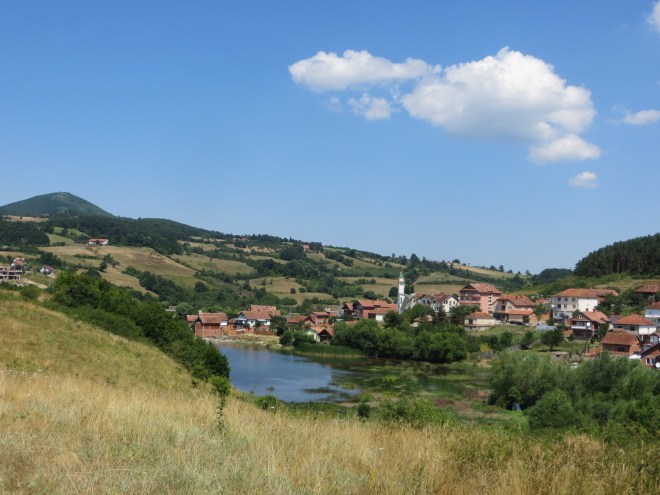
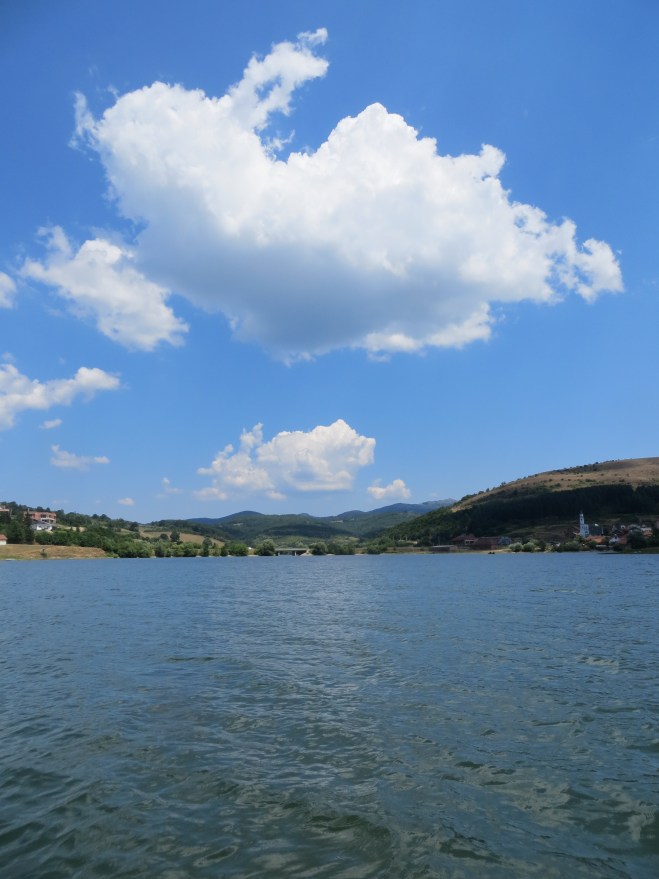
Well, that’s not entirely true. Kosovo is mountainous and shares land borders with four other countries (Serbia, Macedonia, Albania, and Montenegro). However, it does have a few lakes. On Friday, my friend Chester and I visited Batlava Lake, a man-made lake.

When we arrived, we walked halfway around the lake, and decided to rent a paddleboat. (Cost: 5 Euro for one hour.)

When we were done paddling, we walked halfway back around the lake and had lunch at a restaurant on the water.

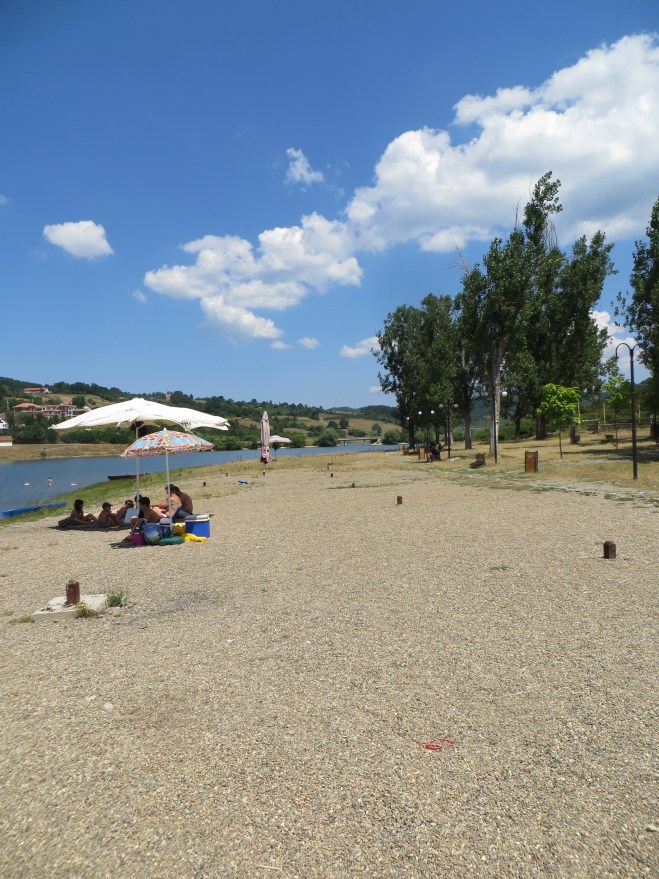
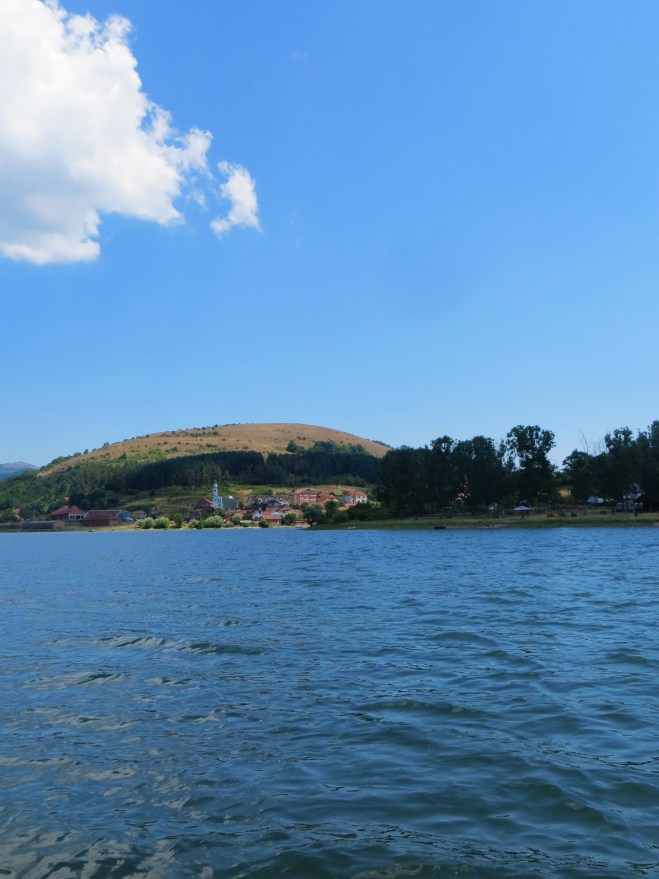
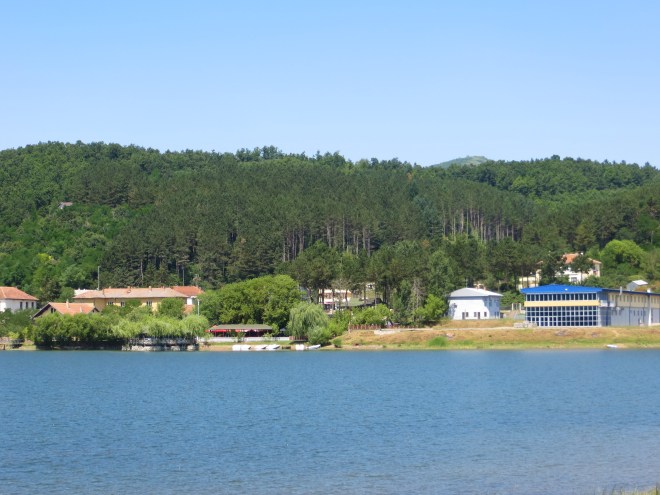
Batlava Lake was clean and quiet. I was surprised more people weren’t there. It was a nice little summer day trip. 🙂

Batlava Lake sign
Walking to the lake
Batlava Lake
Ridiculously beautiful view
Batlava Lake
The beach
B Lake
Representing America
Batlava Lake 6
Boat rental … We opted for a paddle boat.
Batlava Lake 9
On the water
Batlava Lake 7
Tall trees
Kosovo
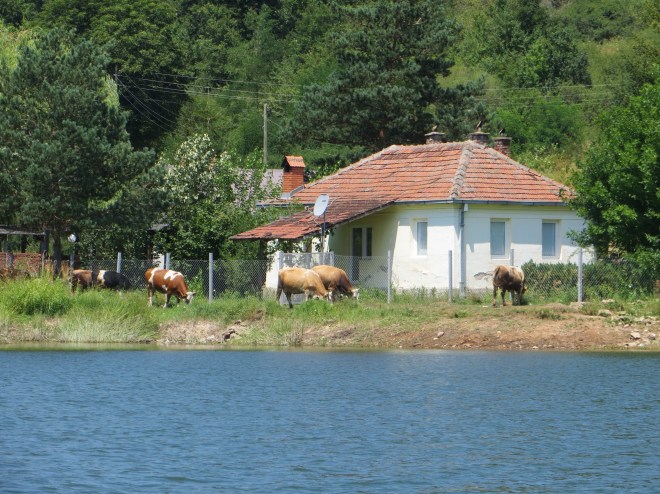
Moo

https://www.instagram.com/p/BWzuESKh7TM/?taken-by=hellofromkosovo

If you plan to visit Batlava Lake, here is something to note: You don’t catch the bus at the main bus station in Pristina. Instead, you catch the bus at a stop near here:

take the bus to lake batlava kosovo

The cost is 1.70 Euro each way (it is about a 45-minute trip from Pristina to the lake).

Batlava Lake
So pretty

Traditional Clothing and Handmade Rugs

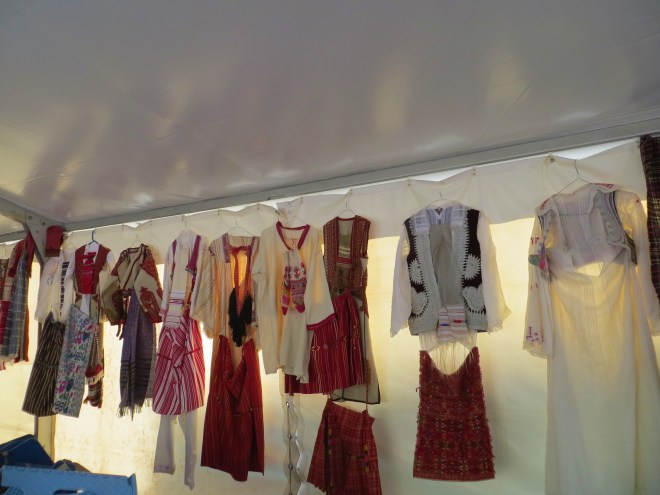
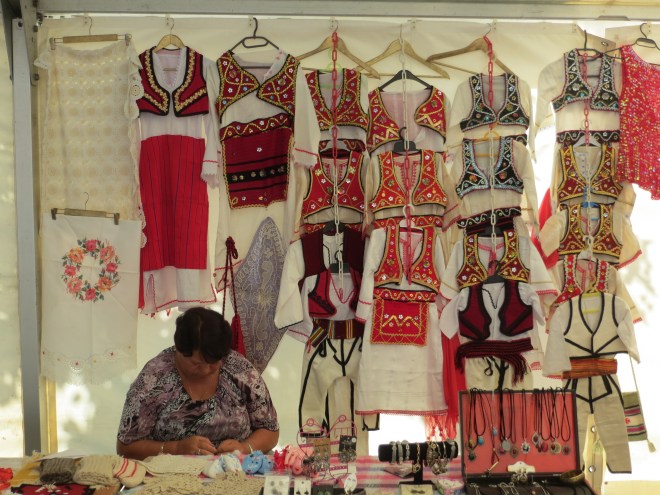
I was in Pristina over the weekend and had a chance to wander through this street fair. I previously posted about the Pristina Bazaar, which is like an expanded farmer’s market. In comparison, clothing and rugs were sold at this fair.

Pristina fair 2
OSCE Trade Fair
Pristina fair
Pristina fair
Albanian rugs
Handmade rugs
buy Albanian clothing
Traditional Kosovar clothing
Traditional Albanian dress
Traditional clothing, Kosovo
Kosovo Albanian childrens clothing
Children’s traditional clothing, Kosovo
handmade goods kosovo
Handmade goods

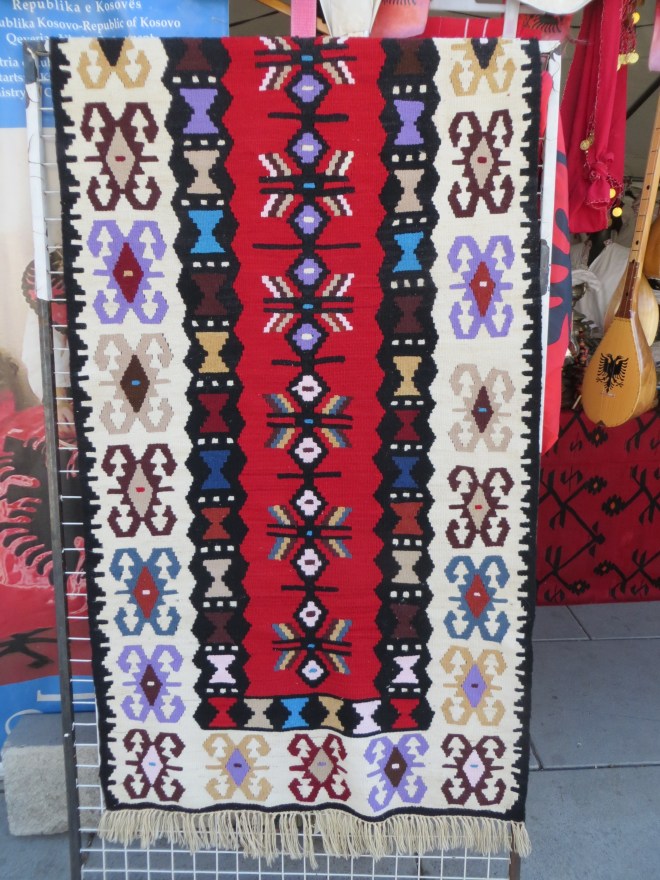
I LOVED this handmade, wool rug. It was 120 Euro, which I think is very reasonable. While I have bought or been given a few little trinkets I’ll keep to remember my time in Kosovo, I’d really like a larger conversation piece for my home someday. (A “pièce de résistance,” as the French would say.)

Albanian handmade wool rug
GORGEOUS!

“Oh,” I’ll tell visitors to my home, with my eyes getting misty, “I bought that in Kosovo when I was serving in the Peace Corps.”

I think I could bring a rolled-up rug with me on an airplane. The problem is, I’ll already have about 100 lbs. of luggage to wrangle when I leave Kosovo.

I walked by the tent several times to gaze longingly at *my* rug … 🙂

A day later, I saw the following music video on tv. I thought it was cool because the singers and dancers are wearing traditional clothing. The video is an interesting blend of old and new (and appears to have been filmed somewhere in the Balkans).

I didn’t know the name of the video (it’s Hatixhe, a woman’s name) so I texted my teaching counterpart for help in finding it online. She’s really good at that. I’ll be like, “What’s the video with blahty-blah?” and she’ll know exactly what I am talking about.

Kosovar Superstitions

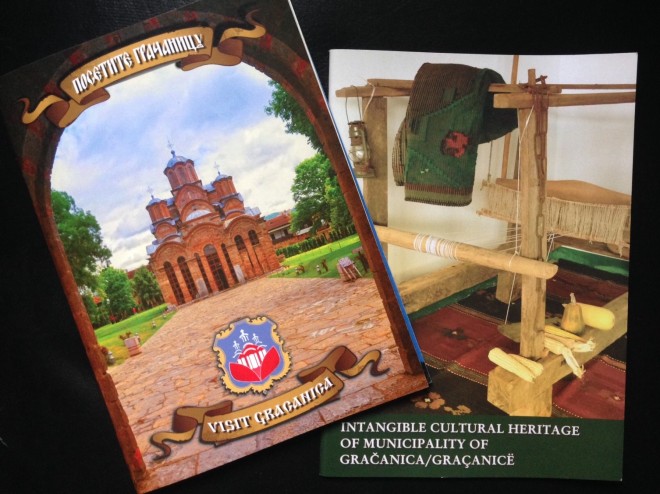
When I visited the village of Gračanica this spring, my friend provided me with two tourists guides put out by the municipality. These glossy booklets are filled with all kinds of interesting information — history, notes on culture and religion, recipes, etc. They are accompanied by color photos, too.

Gracanice Kosovo tourism boolkets

I pulled the following list of superstitions from one of these booklets. This list is slightly abridged; I included my “favorite” superstitions, or the ones I found most interesting.

  • When the left palm itches, you’ll receive money. If the right palm itches, you’ll spend money. (Don’t we have some version of this in the U.S.?)
  • If a rabbit crosses a road to a traveler, it means an accident will happen. (Sounds like the old “black cat crossing your path” superstition. I hate that superstition. I love black cats.)
  • On Sundays and Wednesdays, you shouldn’t cut your nails. It brings trouble. (Duly noted.)
  • When a cat warms its back near the fire, winter will be cold. (This one just seems like common sense to me. “Oh, kitty is cold? I bet that means winter will be cold!” [Also, when is winter ever not cold, at least comparatively?])
  • When a rooster crows on the sunrise, weather will be bad. (If this were true, the weather would be bad every day in Kosovo … at least according to my host family’s rooster.)
  • When a donkey rolls in mud, it will rain. (If there’s mud, doesn’t that mean it already rained?)
  • If you drop a bite while bringing it to your mouth, that means the devil took it. (Yikes.)
  • You shouldn’t hold a child by the neck, because it will not grow. (You shouldn’t hold a child by the neck because it’s a mean thing to do.)
  • You shouldn’t burn a broom; you’ll get a toothache. (Why would I want to burn my broom?)
  • You shouldn’t jump over a coffin, because the dead will rise. (I can’t help but wonder if “coffin jumping” was ever a real problem … )

The Last Few Weeks Before Summer Vacation

I fully expected that the last few weeks of school would drag by. I thought I’d be eager for the school year to be over, so I could visit home and then enjoy my summer vacation. But surprisingly, the last few weeks went by quickly.

Above: One of my fourth graders wrote me a sweet letter, and drew some pictures for me.

It is a tradition in Kosovo for the 9th grade to have a prom. I’ll admit, I didn’t want to attend (I don’t even teach the 9th grade). In my experience, celebrations in Kosovo can go one of two ways: they’re either fun, or they drag on forever. I tried to get out of going to prom by saying I didn’t have any money (because everyone had to pay their own way). Well, then my host father insisted on paying for me. So I kind of had to go.

The prom turned out to be pretty fun. My experience was in no way the night-long marathon my friend Chester experienced and wrote about here.

FullSizeRender (19)
My counterpart, another teacher, and me
circle dancing
Circle dancing (of course!)

The only “bad” thing that happened is that I was unexpectedly pulled in front of a microphone and asked to give a speech. Not only do I hate being put on the spot (who doesn’t?), I also don’t possess the language skills to spout off an impromptu speech in Shqip (Albanian). I managed to say, “Urime!” (congratulations), and then I ran away.

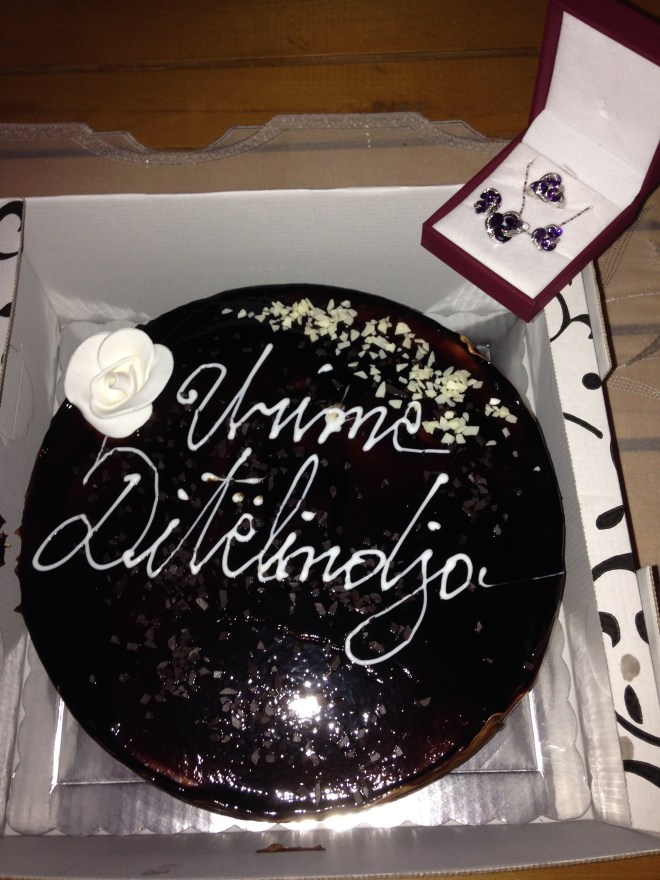
And last, my host family threw me a little birthday party before I left for the States. (I spent my actual birthday at home.) My host mother made all of my favorite foods: mish pule me patate (literally translated: meat chicken with potatoes), sallat shope (a salad with cucumber, tomatoes, and cheese), homemade cheese, and (not pictured), petulla (pronounced “pate-la”), which is fried bread with sugar on top. They also got me a chocolate cake.

Kosovo food
Kosovar food

chocolate cake

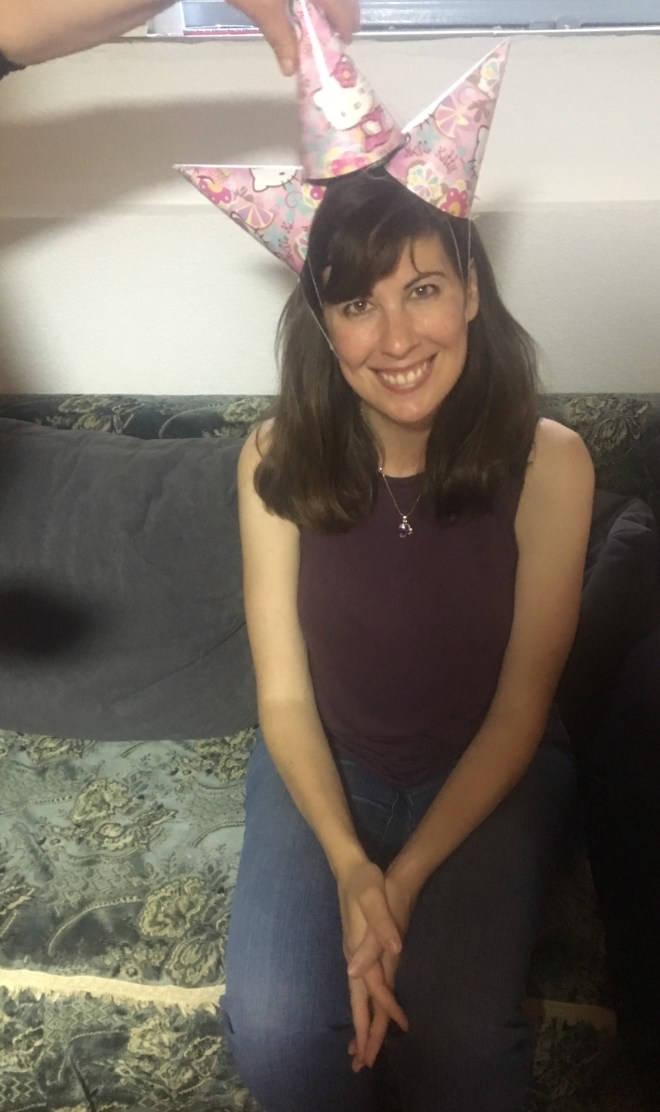
My host family invited my two site mates (Peace Corps speak for “other volunteers who live near you”) for dinner. Rachel brought Hello Kitty party hats.

happy birthday to me
Happy Birthday to me

Peja Technology Camp

So, there is this thing in Peace Corps called “secondary projects.” A secondary project is anything you do for your host country outside of your primary job role. (Writing this blog counts as one of my secondary projects, because I am sharing information about my host country with my friends and family back home.) LOOK AT ME, SECONDARY PROJECTING AT YOU!

The Peace Corps (at least here in Kosovo) takes a pretty non-directive approach to secondary projects. Volunteers are expected to do secondary projects, but we have a lot of autonomy in the projects we choose. The basic attitude seems to be, “Go forth and … do stuff.”

One of my friends and another volunteer took on an ambitious project — hosting a 7-day technology camp for middle-school kids in Peja. I attended on the first day to show moral support. 1) My host brother did a presentation on graphic design and 2) One of my students attended, and I wanted to shepherd her and make sure she knew where she was going.

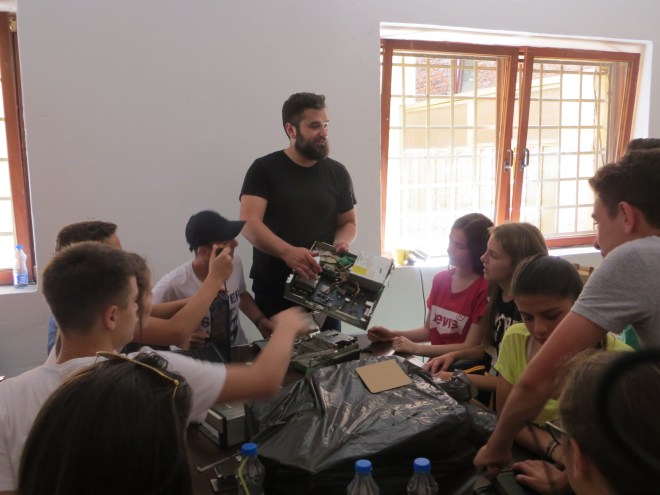
The day started with a series of ice-breakers, followed by my host brother’s presentation. After a lunch break, we took the kids over to Anibar, an NGO that primarily focuses on teaching kids about animation. Using old, broken, donated computers, Anibar hosted a “junkyard robots” workshop. Students got to tear apart computers to make their own “robots.”

technology camp peja 2
.
technology camp peja 1
.
technology camp peja 4
.

If I learned anything that day, it’s that kids get very excited when they’re encouraged to break stuff.

technology camp peja 3
.

As far as my own secondary projects go this summer, I am putting together some ideas for a few writing workshops I’d like to host. I’ll also likely help out with Anibar’s big film festival in August.

It’s been about a billion degrees here lately. I have to say — at this point, my desire to help Kosovo is about equal to my desire to lie around with no clothes on and read books. 😛 Let’s see if I can rally …

Guest Blogger, Garrett Wheeler: Agriculture in Kosovo

April’s Note: My friend Nicole asked me to write a post about gardening/agriculture in Kosovo. Since I don’t know much about the subject, I decided to outsource her question. Below is the account of one of my fellow volunteers, Garrett Wheeler.

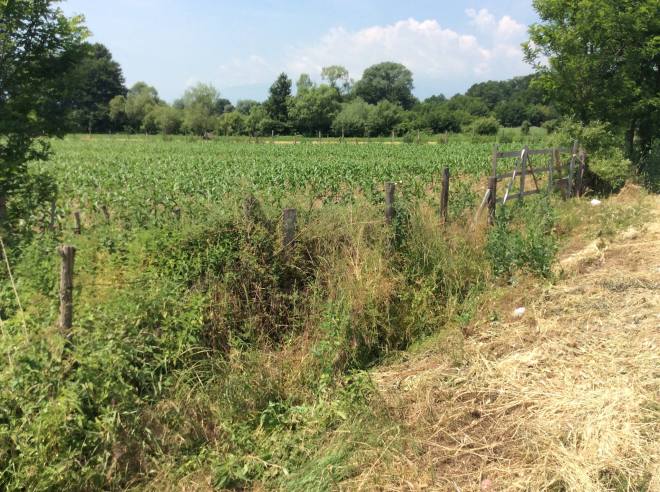
With the advent of spring arises a slew of tasks pertinent to raising crops. After months of neglect, farmers begin restoring fields marred by frigid weather. Makeshift fences, comprised of wood and barbed wire, oft become loose or fall apart on account of the wind. A pair of pliers, hammer, digging bar (an instrument somewhat akin to the crowbar), and U-nails are needed to mend damage accrued. While pliers pull and twist wire until taut, U-nails are driven into wooden stakes. The digging bar, aside from punching holes in the ground, may act as a sledgehammer fastening poles that have wriggled free.

agriculture kosovo 3
Photo courtesy of Garrett Wheeler

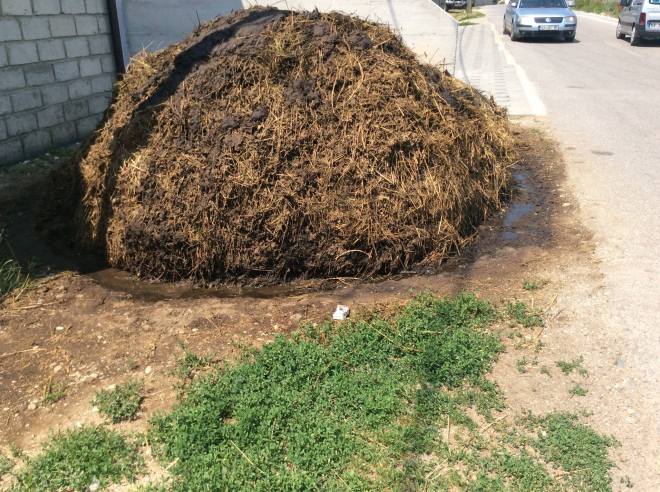
Upon completion of maintenance, a far more grueling chore awaits; fertilization. As a tractor, equipped with a trailer, positions itself near the accumulated pile of manure, workers, with the aid of pitchforks, start the loading process. Though precautions, like gloves and rain boots, are taken to promote cleanliness, the job is inherently dirty. It is not uncommon, for example, to have dung flung your direction; especially when fatigue sets in. With the trailer overflowing, tractor and crew make their way to the field. While the tractor cruises at a leisurely pace, compost is scattered left and right. A sore back and tired arms are typically awarded to all participants.

agriculture kosovo 4
Photo courtesy of Garrett Wheeler

In preparation for sowing, a plow is hauled the entirety of a field leaving neat rows of finely ground soil in its wake. Utensils for digging are then used to create holes. As one punctures the earth, another trailing behind deposits seed. Corn and beans are planted simultaneously. While maize grows upright, the latter coils around adjacent stalks. A nearby stream supplies water when barred.

Gleaning of produce occurs in September. Hefty bags are carted and stuffed with brown pods. Those still green are unripe and need not be plucked. Though the weather may be warm, long sleeve shirts are worn to prevent cuts (maize leaves possess jagged edges which tear skin if brushed). Work is long and tedious requiring numerous days to complete. Corn, conversely, is harvested quickly. Buckets filled to the brim are dumped in a close by trailer towed by a tractor.

agriculture kosovo 1
Photo courtesy of Garrett Wheeler

Beans reaped must then be strewn across a tarp and left to bathe in the sun. After several days, or when the shells become hard and brittle, the heap is battered with the shaft of a rake. Empty husks are then brushed away revealing seed below. Once the product has been gathered in containers, it is transferred to empty sacks. Prior to dumping, however, it is necessary to remove remaining debris. As one individual focuses on slowly pouring beans, the other uses a leaf blower to flush out unwanted material.

Within the next couple of weeks, sorting ensues. Spilling small sums onto a flat surface, beans malformed or gnawed by insects are discarded. What remains is either stored for consumption of whisked away to the nearest city and sold. Corn, depending on its strain, has two locales. A small granary houses a variation more red in hue used as fodder for chickens. Yellow corn is sent to the second floor of a neighboring building. A machine adeptly removes kernels dispelling bare cobs.

agriculture kosovo 2
Photo courtesy of Garrett Wheeler

Read posts by other guest bloggers:

Pristina Bazaar

A volunteer friend suggested visiting the bazaar in Pristina, so a small group of us went last week. I had no idea there was a bazaar in Pristina!

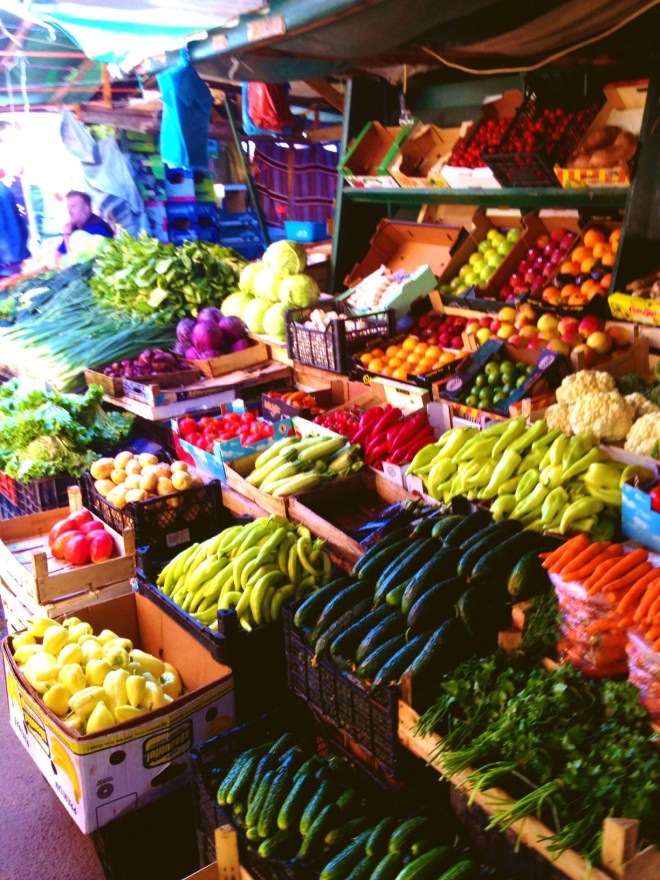
There was SO MUCH produce for sale, for prices even cheaper than what I can find in my village. (Fifty cents for a carton of strawberries, versus 1.50 Euro in my village.) You can also finds lots of other goods at the bazaar, everything from clothing and yarn, to household items, to cigarettes.

SO much produce! This was just one stall.
So delicious …
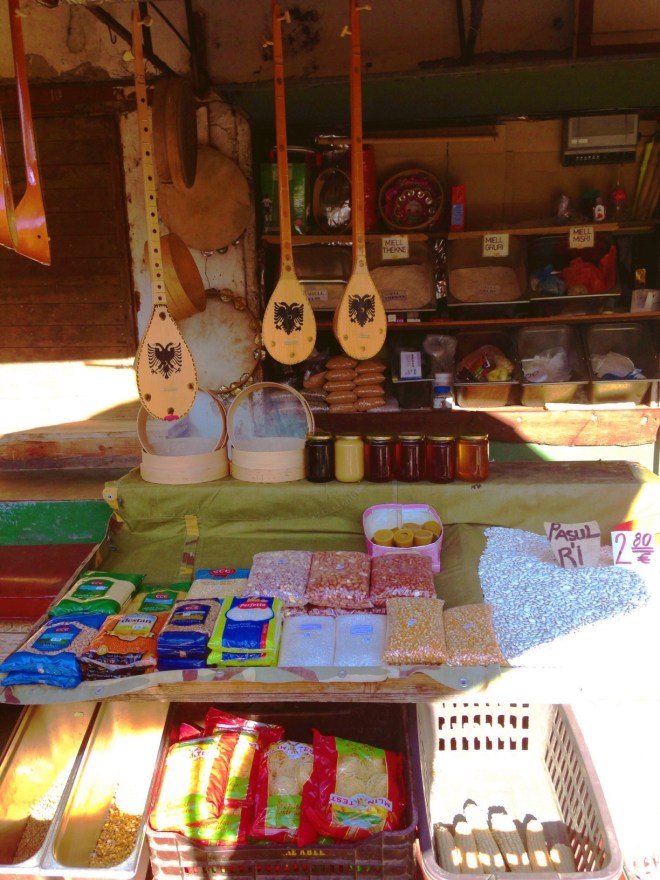
Dry goods, honey, and çifteli (2-stringed instrument)
Wall upon wall of cigarettes
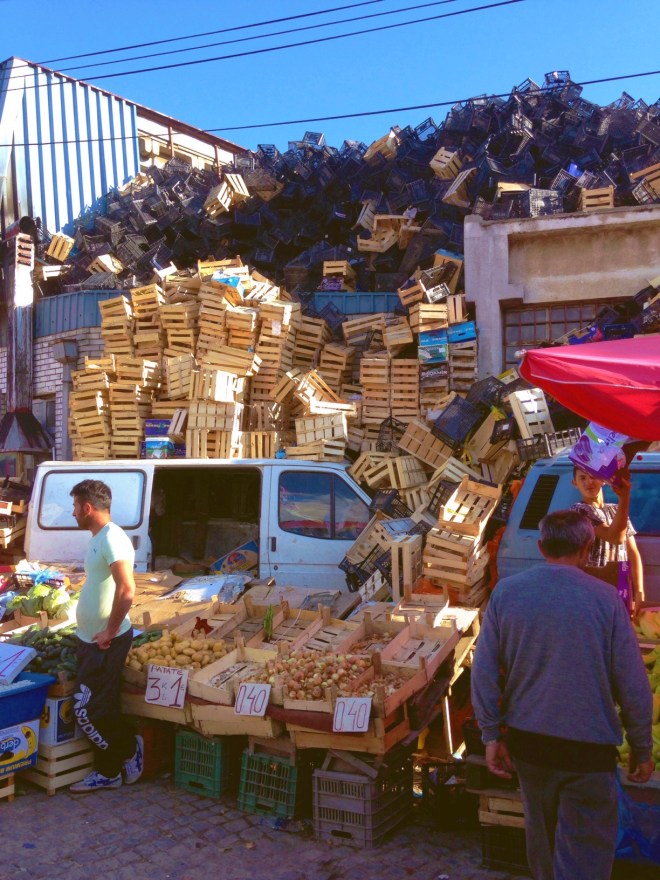
We kept waiting for a box avalanche. It didn’t happen.

As far as I know, the bazaar is open every week day. You can find it here:


pristina kosovo bazaar map.PNG